

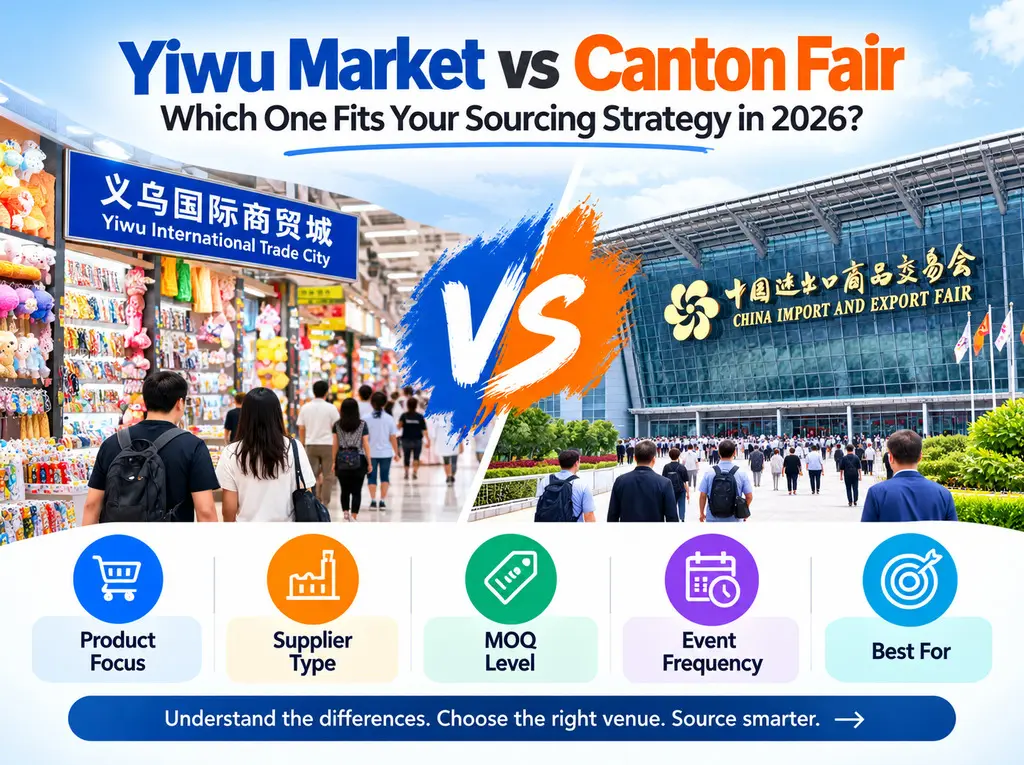
Most first-time importers treat the Yiwu Market and the Canton Fair as an either/or decision. They shouldn’t. These two sourcing venues serve different product needs, different order volumes, and different buying rhythms — and the most efficient buyers in China use them as a single, combined strategy.
In this guide, we compare the Yiwu Market and the Canton Fair across seven key dimensions, explain when each venue is the better choice, and show you how experienced importers combine both to cut sourcing costs and shorten lead times.
Yiwu Market vs Canton Fair: Quick Comparison
| Dimension | Yiwu Market (International Trade City) | Canton Fair (China Import & Export Fair) |
| Type | Permanent wholesale market, open year-round | Trade fair, held twice a year (spring & autumn) |
| Location | Yiwu, Zhejiang Province | Pazhou Complex, Guangzhou |
| Scale | 75,000+ booths across 5 main districts, 4+ million m² | ~25,000+ exhibitors, 1.5+ million m² per session |
| Product focus | Small commodities: gifts, toys, accessories, household goods, stationery, textiles | Full range: electronics & machinery (Phase 1), home & gifts (Phase 2), textiles, shoes, medical & food (Phase 3) |
| Supplier type | Market booths — many factory-direct or exclusive distributors | Mostly manufacturers and large trading companies |
| Frequency | Open 6 days a week, year-round (closed ~2–3 weeks for Chinese New Year) | 3 phases × 5 days, April and October |
| Typical MOQ | Low — often 50–200 units per SKU | Higher — factory-scale orders are the norm |
| Best for | Multi-category, low-MOQ, mixed-container buying | Trend-spotting, factory-direct sourcing, industrial and electronics products |
If you only have 30 seconds, here is the short version: the Yiwu Market is where you buy ongoing volume of small commodities at low MOQs; the Canton Fair is where you meet factories, see new products, and source outside the small-commodity range. Now let’s look at both in detail.
What Is the Yiwu Market?
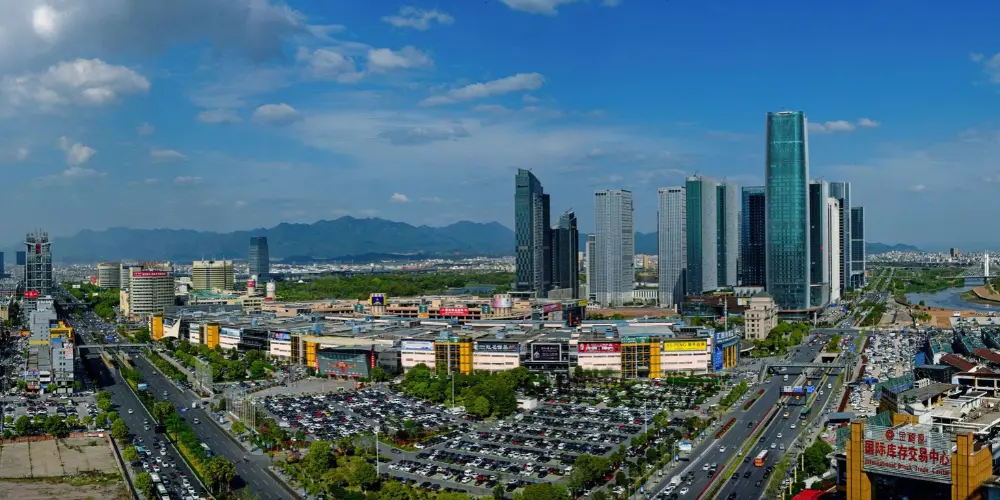
The Yiwu International Trade City (often just called “Yiwu Market” or “Futian Market”) in Yiwu, Zhejiang Province is the world’s largest wholesale market for small commodities. It spans more than 4 million square meters across five interconnected districts, housing over 75,000 supplier booths and hundreds of thousands of product varieties — from toys, artificial flowers, and jewelry to hardware, kitchenware, socks, and seasonal decorations.
Two characteristics define Yiwu:
- It never closes. Unlike a trade fair, Yiwu is a permanent market open six days a week, roughly 300+ days a year (with a 2–3 week shutdown around Chinese New Year). Suppliers keep permanent booths, so you can visit, re-order, and build long-term relationships at any time.
- It is built for small commodities. A very large share of the booths sell directly from their own factories or act as exclusive distributors, which keeps prices near factory level. Typical MOQs start around 50–200 units per SKU — and are often negotiable lower for trial orders.
This makes Yiwu the natural home base for importers of general merchandise: dollar-store and supermarket buyers, e-commerce sellers, gift and party suppliers, and anyone building mixed containers across many categories.
What Is the Canton Fair?
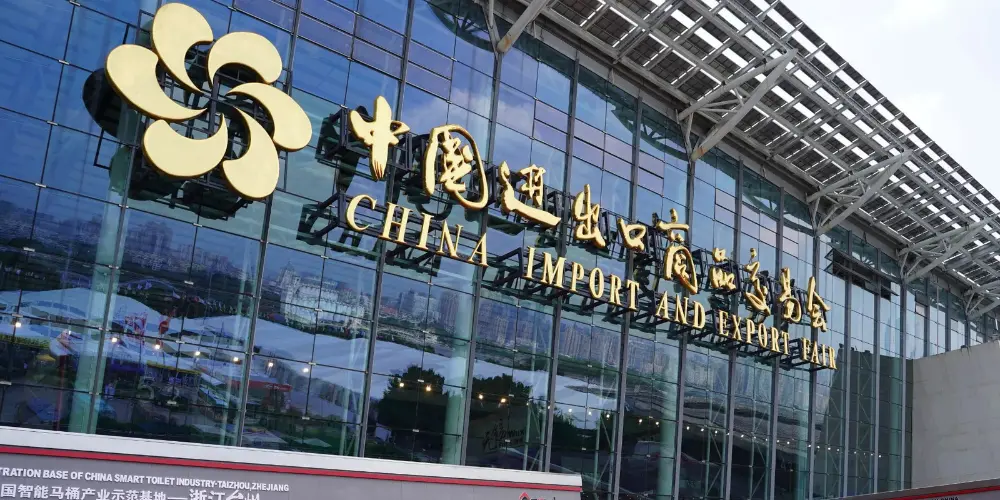
The China Import and Export Fair — universally known as the Canton Fair — has been held in Guangzhou since 1957. It is the largest trade fair in the world, running twice a year (April and October) in three phases of five days each at the Pazhou Complex.
The autumn 2026 schedule, for example:
| Phase | Dates (Autumn 2026) | Focus |
| Phase 1 | Oct 15–19 | Electronics, appliances, machinery, vehicles, hardware, new energy |
| Phase 2 | Oct 23–27 | Houseware, kitchenware, gifts, decorations, furniture, building materials |
| Phase 3 | Oct 31 – Nov 4 | Textiles, garments, shoes, bags, office supplies, medical, food |
7 Key Differences Between Yiwu Market and the Canton Fair
1. Product Range and Category Depth
Yiwu dominates small commodities — no other venue on earth offers this density of gift, home, accessory, and general-merchandise suppliers. But its range stops there. The Canton Fair covers the full industrial spectrum: electronics, machinery, vehicles, building materials, medical devices, food, and fashion — categories where Yiwu has little to offer.
Rule of thumb: if your product fits in a supermarket aisle or a gift shop, Yiwu has a deeper selection. If it plugs in, gets installed, or requires industrial manufacturing, the Canton Fair is the venue.
2. Supplier Nature: Booths vs Factories
Yiwu booths are a mix of factory-direct showrooms, exclusive distributors, and trading companies — you often cannot tell which is which at first glance. Canton Fair exhibitors are mostly manufacturers or large trading houses with export licenses, carefully vetted through the fair’s application process. That vetting doesn’t guarantee quality, but it does mean a higher baseline of export experience and documentation readiness.
3. Price and MOQ
Yiwu’s low MOQs (commonly 50–200 units, negotiable down to 10–30 for trials) and competitive booth pricing suit smaller orders and mixed-SKU containers. Canton Fair factories typically quote at larger volumes — the economics of exhibiting push them toward serious production runs. Prices at the fair can be excellent for volume, but you generally cannot test the market with a 100-unit trial order the way you can in Yiwu.
4. Timing and Buying Rhythm
Yiwu runs on your schedule: visit any week of the year, re-order when inventory runs low. The Canton Fair runs on China’s calendar: you get exactly two five-day windows per phase, per year. Miss the October session, and your next chance for the same supplier lineup is April. For buyers with steady replenishment cycles, Yiwu’s year-round access is structurally more convenient.
5. Sampling and Product Development
In Yiwu, samples are usually available immediately — pulled straight from the booth, often for a few dollars each, and customizations (packaging, colors, private labeling) can be discussed on the spot with follow-up visits. At the Canton Fair, display samples exist but often cannot leave the booth during the fair; sampling, quoting, and customization happen in the weeks of follow-up correspondence after the event. Yiwu compresses this cycle; the fair extends it.
6. Quality Control and Verification
At the Canton Fair, exhibitor vetting and factory-focused exhibitors make initial trust easier — and many exhibitors offer factory visits during or right after the fair. In Yiwu, the barrier to entry is low, which is exactly why the market is efficient — and why it demands more diligence. Booth identity, factory relationships, and consistency between sample and mass production all need verification, ideally through a local agent who can revisit suppliers on your behalf.
7. Best-Fit Buyer Profile
| Buyer type | Better starting venue |
| E-commerce seller (Amazon, TikTok Shop) testing small orders | Yiwu |
| Supermarket / dollar-store / general merchandise importer | Yiwu |
| Electronics, appliances, machinery buyer | Canton Fair |
| Buyer scouting new suppliers and product trends across industries | Canton Fair |
| Mixed-container consolidator with many small SKUs | Yiwu |
| Brand owner sourcing at factory scale | Canton Fair, then factory audits |
When the Yiwu Market Is the Better Choice
Choose Yiwu when:
- You buy small commodities in many SKUs. Gifts, party supplies, household items, accessories, stationery, kitchenware, textiles — Yiwu’s density lets you fill a mixed container from dozens of suppliers in days.
- You need low MOQs. Testing 20 products at 100–200 units each is a normal Yiwu workflow; at most Canton Fair booths, it is not.
- You replenish year-round. Permanent booths mean permanent relationships — re-orders don’t wait for the next fair.
- You want to see real market prices. With hundreds of booths per category side by side, Yiwu gives you the fastest realistic price discovery in small commodities.
When the Canton Fair Is the Better Choice
Choose the Canton Fair when:
- Your products sit outside Yiwu’s core range. Electronics, machinery, vehicles, building materials, medical devices, food — the fair’s Phase 1 and Phase 3 coverage is unmatched.
- You want direct factory access at scale. Exhibitors are manufacturers seeking serious buyers; if you’re placing production-sized orders, the fair is the most efficient factory-meeting venue in the world.
- You need trend intelligence. The fair is where Chinese manufacturers launch new products. Walking one phase gives you a preview of what will hit Western retail shelves in 12–24 months.
- Your time in China is limited. One five-day phase can replace weeks of scattered factory visits — especially if you combine it with factory tours in the Pearl River Delta immediately afterward.
Red Flags to Avoid at Both Venues
At the Yiwu Market:
- No factory behind the booth. Some stalls are pure traders quoting on other people’s goods. Ask for the factory location and production photos — and have someone verify them.
- “Stock available” pressure tactics. Claims of “last stock, decide today” are usually sales pressure. Legitimate suppliers take orders on lead time, not manufactured urgency.
- Sample-to-production drift. The sample you approve and the mass production you receive can differ in material or finish. Lock specs in writing and inspect before shipment.
At the Canton Fair:
- Middlemen posing as manufacturers. A polished booth doesn’t mean a factory behind it. Ask for the business license and cross-check the manufacturer name on any certifications shown.
- Show-sample bait. Some booths display high-spec samples while quoting for a lower-spec production version. Confirm the quoted specification matches the displayed sample, in writing.
- Fair-only pricing illusions. “Canton Fair special price” is a negotiation frame, not a fact. Benchmark quotes against post-fair correspondence and other suppliers before committing.
At both venues, the underlying risk is the same: you are making six-figure decisions on a handshake and a name card. That is a solvable problem — but only with on-the-ground verification.
Why Smart Buyers Combine Both (And How)
The most efficient importers we work with don’t choose between Yiwu and Guangzhou — they sequence them. The pattern looks like this:
- Walk the relevant Canton Fair phase to spot trends and shortlist factories. The fair is unmatched for seeing where product categories are heading and meeting capable manufacturers face to face.
- Move to Yiwu to buy. For small commodities and mixed containers, Yiwu’s low MOQs, year-round access, and side-by-side price competition deliver better unit economics on ongoing volume.
- Consolidate and ship from one base. Sourcing across two cities only works if someone controls sample collection, QC, and container consolidation locally.
This is exactly how we operate at Union Source. From our 10,000 m² showroom in Yiwu — stocking more than 80,000 products — we run buying programs for importers worldwide, and we exhibit at the Canton Fair twice a year with two booths in Phase 2 (gifts, houseware, and home products). That means our clients see new products and factory capability at the fair, then execute their purchasing through our Yiwu operation with consolidated QC and shipping — one team covering both venues. Over $250 million in annual sourcing volume moves through this model.
How a Yiwu Sourcing Agent Helps You Get the Most from Both
Whether your center of gravity is Yiwu or Guangzhou, a sourcing agent based in Yiwu solves the structural problems of both venues:
- Verification. Agents confirm which booths are factory-direct, visit production sites, and keep supplier files current between your trips.
- Negotiation and MOQ flexibility. Local agents combine orders across clients and negotiate MOQs and prices that individual buyers cannot reach alone.
- QC and consistency. Inline and pre-shipment inspection closes the sample-to-production gap — the single biggest risk in market-based sourcing.
- Consolidation. Collecting goods from dozens of suppliers into one inspected, properly packed container is where mixed-SKU buyers win or lose their margin.
If you’re planning a sourcing trip in 2026, the highest-leverage decision isn’t Yiwu vs Canton Fair — it’s whether you have a capable partner on the ground at either end.
FAQs About the Yiwu Market and the Canton Fair
Is the Canton Fair free to attend?
Yes, for overseas buyers. Pre-register online for a free buyer badge; on-site registration is also possible but slower.
Is the Yiwu Market open year-round?
Yes — six days a week (most booths close Sundays), roughly 300+ days a year. It closes for about 2–3 weeks around Chinese New Year.
Do I need a visa for Yiwu or the Canton Fair?
Most international buyers use a business (M) visa; China also offers transit visa exemptions for eligible nationalities. Check the current policy for your passport before booking flights.
Can I visit both in one trip?
Yes. Guangzhou and Yiwu are connected by high-speed rail (via Hangzhou or direct services), so buyers commonly walk one Canton Fair phase, then spend several days in Yiwu.
Do suppliers at both venues speak English?
English capability varies. Major Canton Fair exhibitors usually staff English speakers; many Yiwu booths do not. Most international buyers in Yiwu work through an agent or translator.
Which is cheaper: Yiwu or the Canton Fair?
For small commodities at low-to-mid volumes, Yiwu generally wins on unit price and MOQ. For large factory-run orders outside the small-commodity range, the Canton Fair is where those suppliers exhibit at all.
Conclusion
The Yiwu Market and the Canton Fair are not competitors — they are two halves of a complete China sourcing strategy. Use the Canton Fair to see where your category is heading, meet factories, and source outside small commodities. Use Yiwu for year-round, low-MOQ buying of general merchandise, backed by permanent supplier relationships. The buyers who win are the ones who run both, with reliable execution on the ground in between.
Planning your 2026 sourcing trip? Talk to our team about combining Canton Fair trend scouting with Yiwu-based purchasing, inspection, and consolidated shipping.

Zack, Marketing Manager at Union Source, brings years of experience in global sourcing and market strategy. Zack focuses on analyzing market trends and sharing practical insights that help international buyers and business partners stay ahead in the fast-changing world of wholesale trade.