

The first time a Chinese supplier sent me a quote with “FOB Ningbo” at the top, I nodded like I understood and then spent 45 minutes on Google trying to figure out what it meant.
I’ve been working in China product sourcing for over 20 years, helping importers across 80+ countries navigate everything from factory selection to final delivery. And I can tell you honestly: the confusion around FOB, CIF, and EXW is one of the most common reasons first-time buyers end up paying way more than they should — or get a nasty surprise when something goes wrong mid-shipment.
So this guide is the one I wish existed when I was starting out. Plain English. Real examples. No logistics jargon for its own sake.
Why Shipping Terms Matter More Than You Think
When you get a price quote from a Chinese supplier, that price doesn’t mean the same thing every time. A $4.50/unit price under EXW terms is not the same as a $5.20/unit price under CIF terms — even if $4.50 sounds cheaper. The difference can easily be $1,000–$3,000 on a single shipment once you account for who’s responsible for what.
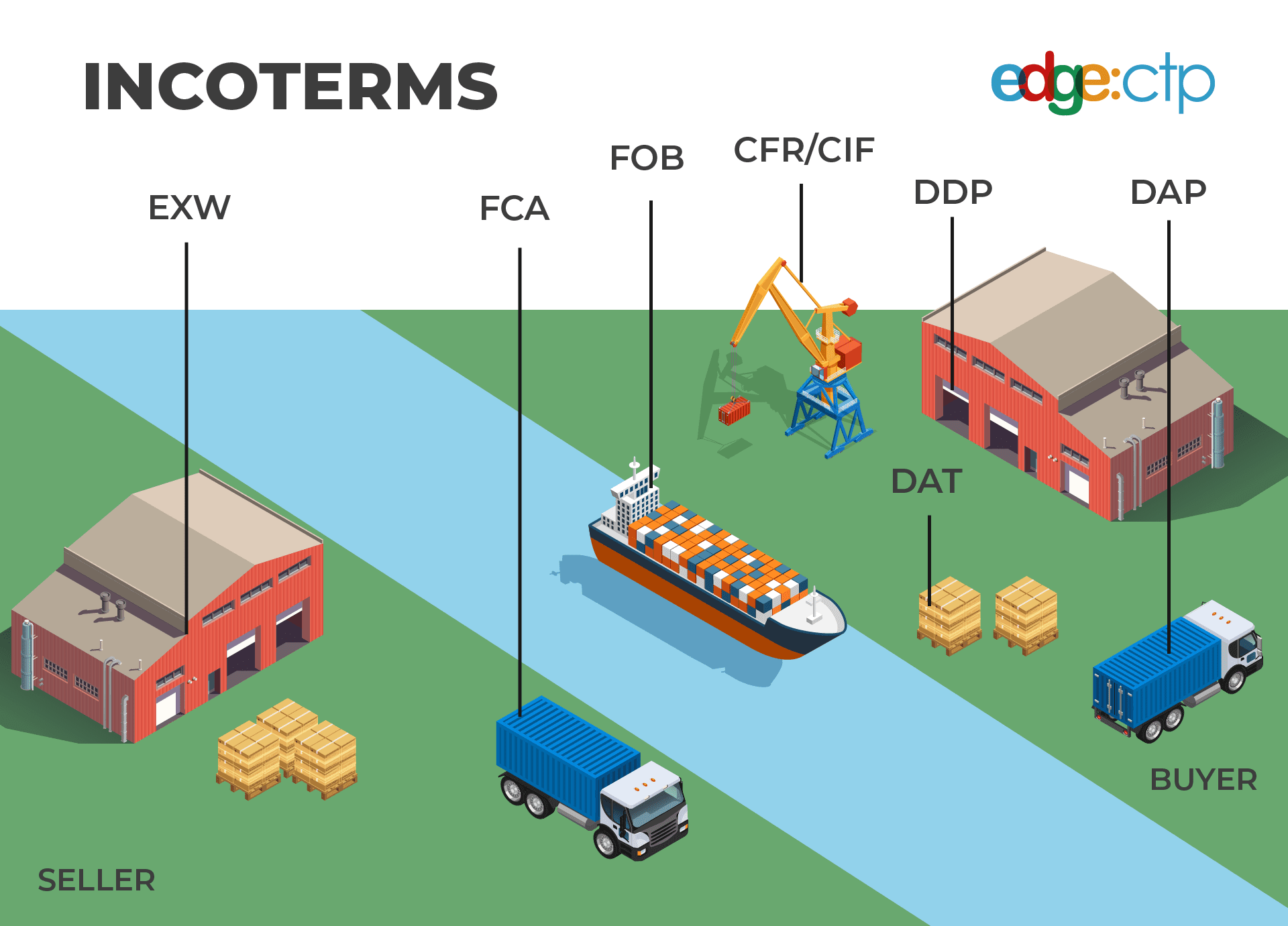
These terms are called Incoterms — short for International Commercial Terms. They’re a set of standardized rules published by the International Chamber of Commerce (ICC) that define exactly where the seller’s responsibility ends and the buyer’s responsibility begins. Every international trade contract uses them.
You don’t need to memorize all 11 Incoterms. When buying from China, you’ll mostly encounter three: EXW, FOB, and CIF. Here’s what they actually mean in practice.
EXW (Ex Works): The Cheapest Quote, The Most Expensive Headache
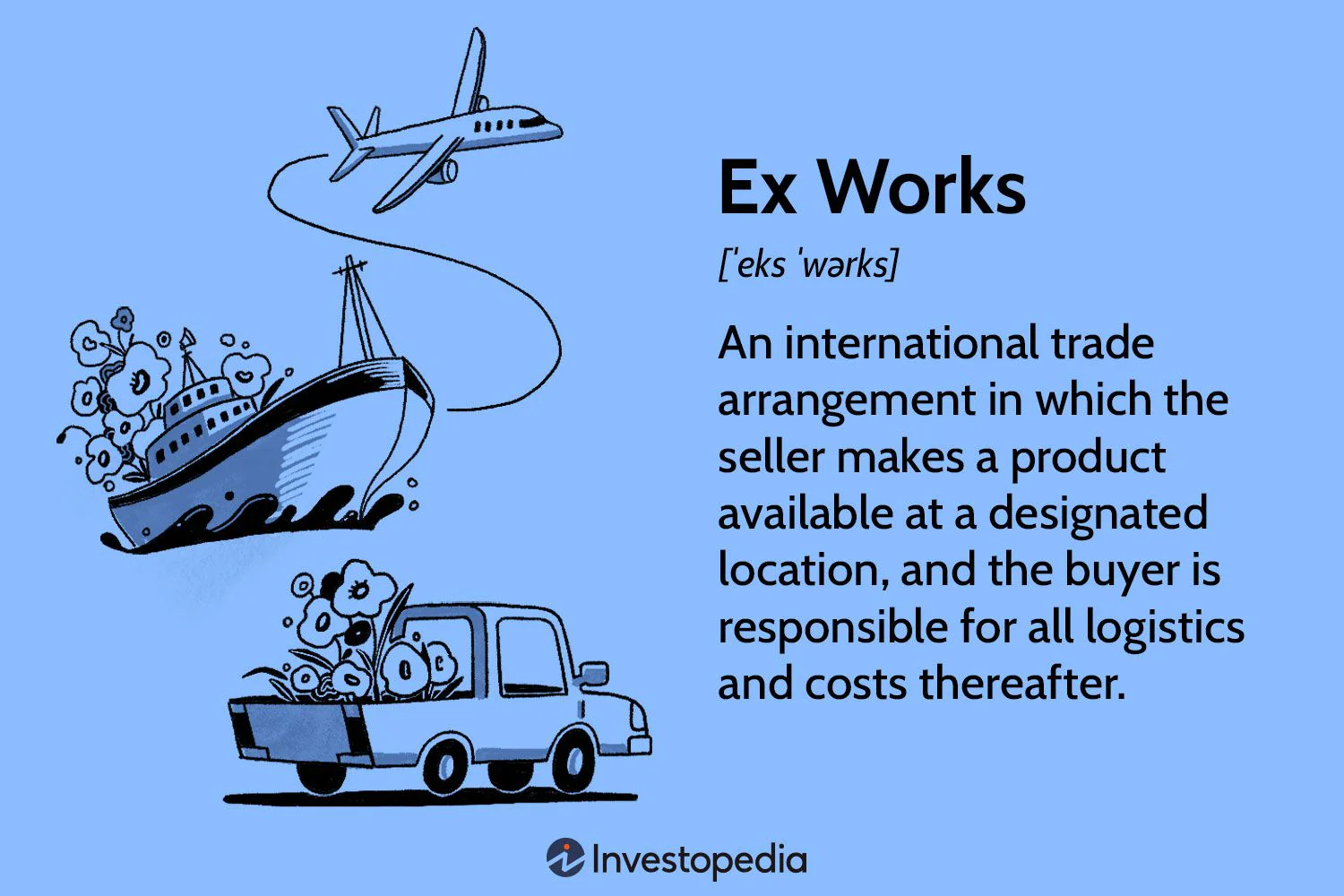
What it means: The seller’s job is done the moment your goods are packed and sitting in their factory. Everything after that — trucking to the port, export customs in China, ocean freight, insurance, import customs in your country, delivery to your door — is your problem and your cost.
Why suppliers quote it: It’s the lowest base price because the seller does the least. Many smaller factories default to EXW because they simply don’t have export experience or relationships with freight forwarders.
What You’re Actually Responsible For Under EXW
Here’s where first-time buyers get shocked. Under EXW, you must organize:
- A truck from the factory to the port (in China, where you likely have no contacts)
- Chinese export customs clearance (requires a licensed Chinese customs broker)
- Port handling fees at origin
- Ocean freight booking
- Marine insurance
- Customs clearance at your destination country
- Import duties and taxes
- Final delivery from port to your address
In practice: If you buy 500 pieces of wholesale toys from a factory in Shantou, and they quote you EXW Shantou, you’d need to either hire a freight forwarder with a China presence to handle the China-side logistics, or have a local agent do it. Without either, the goods just sit at the factory.
Bottom line on EXW: The per-unit price looks great. The actual landed cost — once you add up all the China-side logistics — is often more expensive than FOB, because you’re cobbling together services in a country you don’t operate in. Only choose EXW if you have a very experienced freight forwarder who specifically says they can handle the China-side pickup efficiently.
FOB (Free on Board): The Sweet Spot for Most Importers
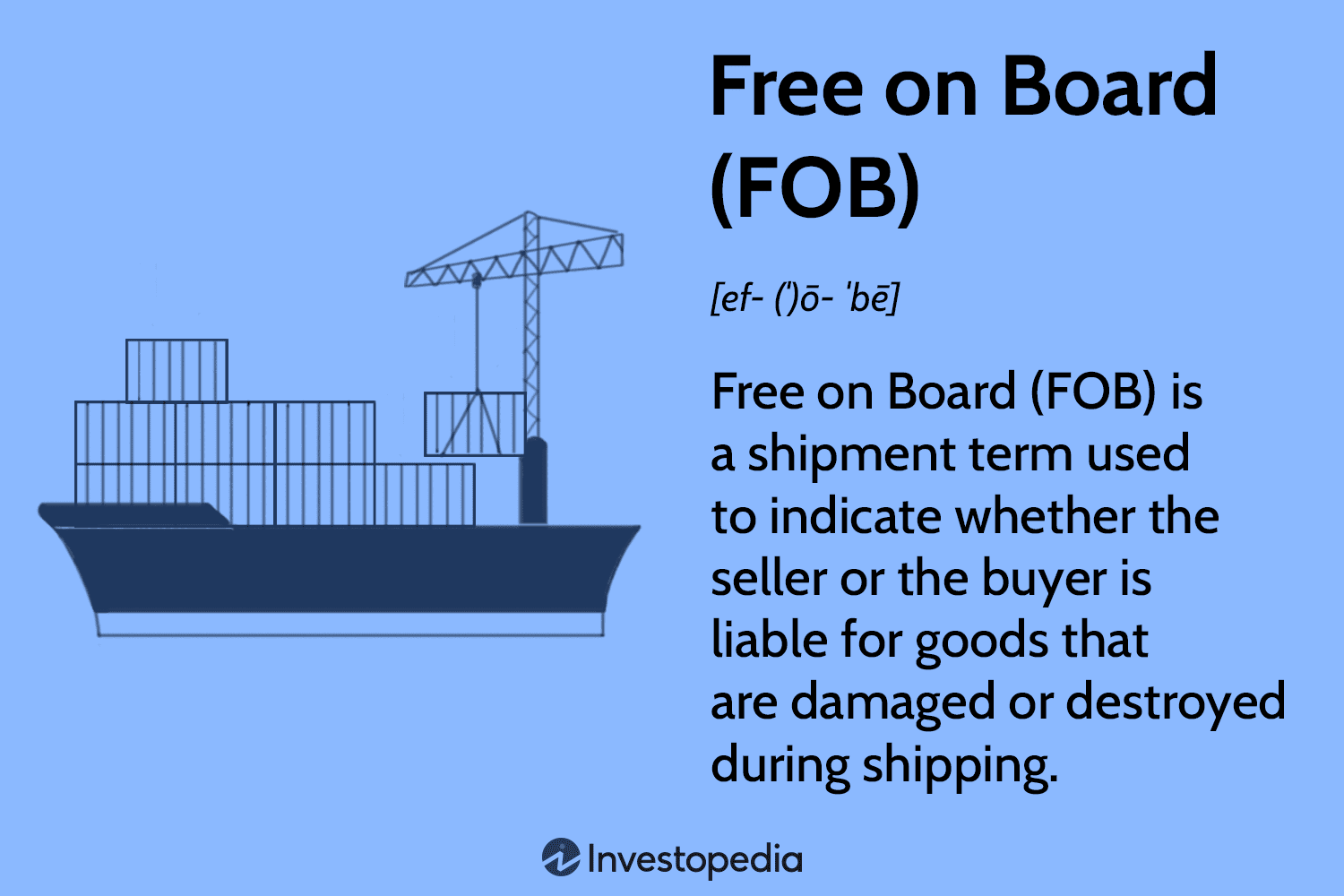
What it means: “Free on Board [named port]” means the seller gets your goods packed, trucked to the named Chinese port, through Chinese export customs, and loaded onto the ship. From the moment those goods are on the ship, the responsibility — and the risk — transfers to you.
About 70% of China’s exports are traded under FOB terms. It’s the industry default for a reason.
What Each Party Does Under FOB
The seller (your Chinese supplier) handles:
- Manufacturing and packing the goods
- Inland transport from factory to the Chinese port (e.g., FOB Ningbo, FOB Shanghai, FOB Shenzhen)
- Chinese export documentation and customs clearance
- Port handling fees at origin
- Loading onto the vessel
You (the buyer) handle:
- Booking the ocean freight (through your freight forwarder)
- Marine insurance (strongly recommended — get it)
- Destination port handling fees
- Import customs clearance in your country
- Import duties and taxes
- Delivery from destination port to your warehouse
A Real-World FOB Example
Say you order 1,000 units of drinkware from a supplier in Ningbo. They quote you $3.80/unit FOB Ningbo.
That $3,800 gets the goods onto a ship in Ningbo. From there, you need to arrange:
- Ocean freight: ~$800–$1,200 for a standard LCL (Less than Container Load) shipment to a US port
- Marine insurance: ~$50–$100
- US customs clearance: ~$150–$300
- Delivery to your warehouse: varies by location
Your real landed cost per unit is closer to $5.00–$5.50. That’s not a problem — it’s just reality. The important thing is that you know this upfront, so you’re not surprised, and so you can choose your own freight forwarder and negotiate the shipping rate yourself rather than letting the supplier’s forwarder quote you whatever they want.
Why FOB is usually the right choice: You get a competitive product price, the supplier handles the complicated China-side logistics they know well, and you get control over the ocean freight — where the real cost savings opportunity is.
CIF (Cost, Insurance, and Freight): Convenient, But Often Costly
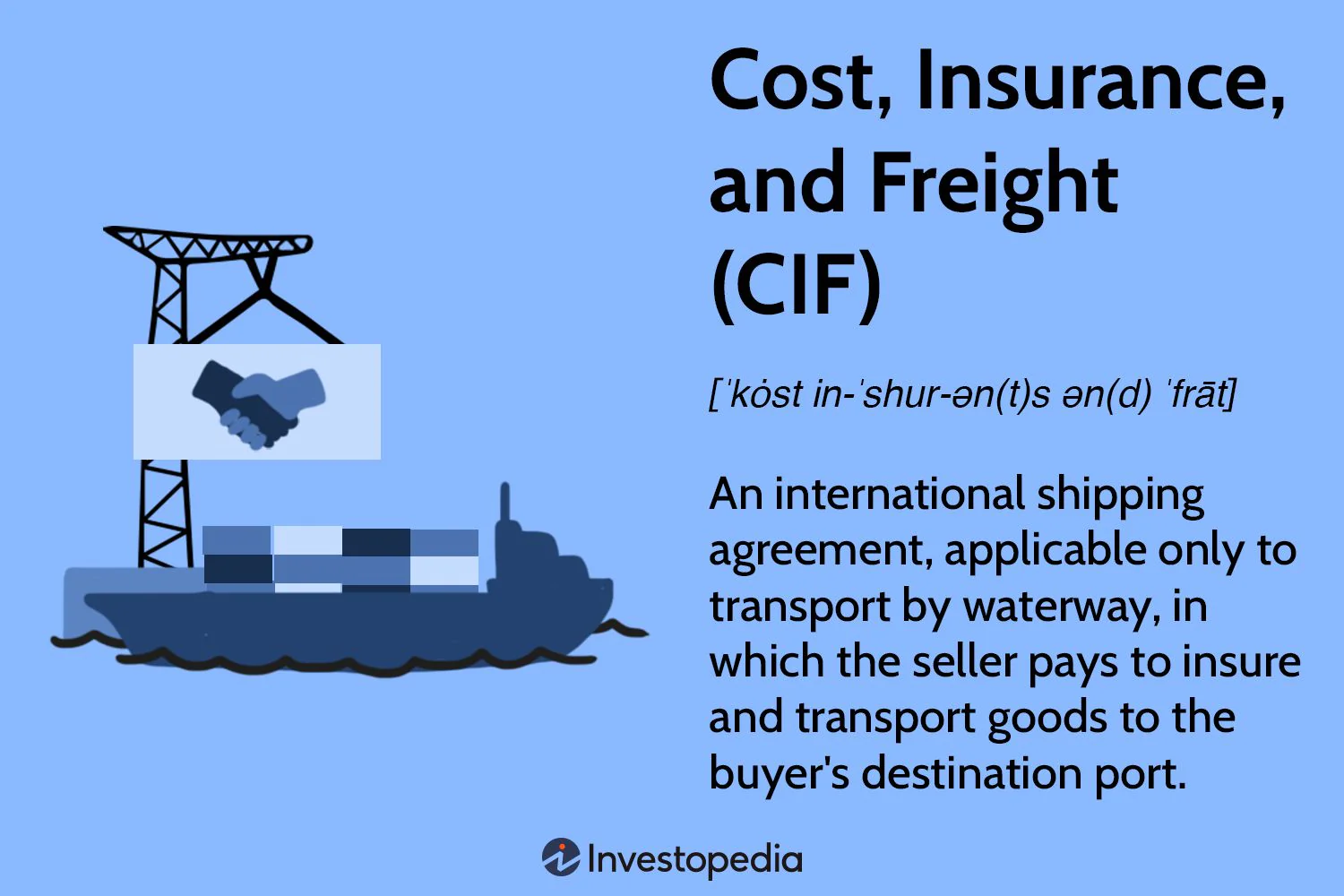
What it means: CIF — Cost, Insurance, and Freight — means the supplier handles everything up to the goods arriving at your destination port. They pack, truck, export, book the ocean freight, and buy the insurance. You take over when the ship docks at your port.
Why CIF Looks Attractive (But Often Isn’t)
On the surface, CIF is appealing: one price, fewer things to coordinate, the supplier deals with the shipping. This is especially tempting for first-time importers.
Here’s the problem. When a supplier quotes you CIF, they’re bundling their shipping markup into your product price. And that markup is often significant — sometimes 20–40% above the actual market freight rate.
Why? Because the supplier books shipping through their preferred freight forwarder, who gives the supplier a rebate or commission. You have no visibility into what the actual freight cost was. You’re paying whatever they decided to charge you.
There’s another issue: under CIF, the supplier chooses the shipping schedule, carrier, and routing. You might end up on a slower vessel, or routed through an extra transshipment port, simply because it’s cheaper for the supplier’s forwarder. You have no say.
When CIF actually makes sense:
- You’re placing a very small first order (under $2,000) where the hassle of finding your own forwarder exceeds the potential savings
- You’re completely new to importing and want to minimize the number of new relationships you need to manage on your first order
- The supplier specifically offers competitive freight pricing (compare their CIF quote against FOB + your own freight quote to check)
The Quick Comparison Table
| EXW | FOB | CIF | |
|---|---|---|---|
| Seller handles | Packing only | Packing + China inland + export customs + loading | Everything to your destination port |
| You handle | Everything | Ocean freight + insurance + import customs + delivery | Import customs + delivery from port |
| Product price | Lowest | Middle | Highest (freight included) |
| Your control over shipping | Full (but complicated) | High | Low |
| Risk transfers to you | At factory gate | When loaded on ship | At destination port |
| Best for | Experienced importers with China-based logistics partner | Most importers | First-time small orders |
Two Other Terms You’ll See: DAP and DDP
While EXW, FOB, and CIF cover most scenarios, you’ll occasionally see these:
DAP (Delivered At Place): The seller is responsible for shipping all the way to your door (or named destination), excluding import duties and taxes in your country. You just pay customs when the goods arrive.
DDP (Delivered Duty Paid): The seller handles absolutely everything — packing, shipping, insurance, and even your country’s import duties and customs clearance. The price you see is truly the all-in landed cost. Very convenient for small orders, but again, you have no control over costs and the markup can be steep.
Some platforms like Amazon’s Vendor Program prefer DDP pricing from suppliers. It’s also common for buyers who want zero logistics hassle, even if it means paying more per unit.
How to Spot FOB Tricks in a Supplier’s Quote (Content Gap #1: What No One Else Tells You)
Here’s something most shipping guides won’t mention: some suppliers use FOB terms in their quotes but then try to add charges that are supposed to be their responsibility.
The most common tricks:
1. Inland freight surcharge Under FOB, the supplier is supposed to cover trucking from their factory to the port. Some will add a line item like “inland transportation: $80” to your invoice, especially if their factory is far from the port. If your contract says FOB [port name], this charge is not your responsibility. Push back.
2. “Export customs fee” requests Chinese export customs clearance is the seller’s cost under FOB. Some suppliers will claim a “customs fee” or “government fee” and ask you to split it. You don’t owe this.
3. Port handling fee manipulation The origin port handling fee (called THC, or Terminal Handling Charge) is the supplier’s cost under FOB. Some pass it to buyers anyway, especially if the buyer doesn’t know to question it.
How to protect yourself:
- Get a detailed invoice that breaks out every line item
- If something looks like a China-side logistics charge, question it specifically: “Under our FOB agreement, isn’t this your responsibility?”
- Work with a reputable sourcing agent who can verify charges and negotiate on your behalf
When we handle product sourcing for our clients, one of the most common things we catch is exactly this kind of charge slippage — suppliers testing whether a foreign buyer notices.
What Actually Happens When Things Go Wrong Mid-Shipment (Content Gap #2: The Part Everyone Skips)
Every guide explains when risk transfers. None of them explain what to actually DO when something goes wrong. Let me fix that.
Scenario 1: Goods Damaged After Loading (FOB Shipment)
Under FOB, once goods are on the ship, risk is yours. If your container arrives with water-damaged products, here’s the process:
- Document everything immediately — photograph all damage before moving anything. Get a damage report from the shipping line or port authority.
- File a claim with your marine insurance — this is why marine insurance is non-negotiable, not optional. You should have arranged this before the goods shipped. Claims windows are typically 3–14 days after delivery, depending on your policy.
- Determine whether damage occurred before or after loading — if your supplier’s packaging was inadequate and the damage was clearly pre-existing, you may have a claim against the supplier despite FOB terms. This is why pre-shipment inspection matters.
- Don’t reject the shipment casually — rejecting a shipment means it may be held at the port at your cost. Work with your freight forwarder on the best path.
Scenario 2: Goods Damaged Before Loading (FOB Shipment)
If damage clearly occurred before goods were on the ship — for example, the goods were already broken when they arrived at the port — this is still the supplier’s risk under FOB. You have a claim against them, not your insurance. Always get a pre-shipment inspection report if you’re worried about quality.
Scenario 3: Shipment Delayed (Any Terms)
Delays happen — port congestion, vessel changes, Chinese holidays, customs holds. Under FOB and CIF, neither you nor the supplier is automatically liable for force majeure delays. Your contract should specify what happens: can you cancel? Is there a penalty? Most standard sourcing contracts have provisions for this.
The practical lesson: Marine insurance is not optional if you’re importing under FOB. A basic policy for a $5,000–$20,000 LCL shipment typically costs $50–$150. That’s the cost of one thing going wrong, and it provides you coverage for the entire ocean journey.
Which Incoterm Should You Use? (Decision Guide)
Use FOB if:
- You have a freight forwarder you trust (or are willing to find one)
- Your order value is over $3,000–$5,000 (worth optimizing shipping costs)
- You want control over carrier and routing
- You’re buying general merchandise, toys, home goods, stationery, or similar products
Use CIF if:
- This is your very first import, under $2,000, and you just want simplicity
- The supplier explicitly offers competitive CIF pricing (always compare against FOB + your forwarder’s quote)
Use DDP if:
- You want zero shipping management headache and are willing to pay a premium for it
- You’re buying through a platform or marketplace that requires it
Avoid EXW unless:
- You have an agent or forwarder specifically set up for China domestic logistics
- Your order is so small (under 100kg) that you need the goods picked up directly
For most people buying general merchandise from China — whether it’s drinkware, stationery, toys, or home goods — FOB is almost always the right starting point.
Frequently Asked Questions
What does “FOB Ningbo” vs “FOB Shanghai” mean?
The port name after FOB tells you exactly where in China the goods will be loaded onto the ship. FOB Ningbo means the supplier ships to Ningbo Port; FOB Shanghai means Shanghai Port. This matters because: (a) ports have different ocean freight rates, (b) if the factory is in Shenzhen but the quote says FOB Shanghai, someone is trucking goods a very long way at their own cost — confirm this is still the supplier’s responsibility. Most factories ship from the nearest major port.
Is FOB price the same as landed cost?
No. FOB price is the cost of goods delivered to the Chinese port and loaded on the ship. Your landed cost includes FOB price + ocean freight + insurance + destination port fees + import duties + customs clearance + final delivery. To calculate true landed cost, get your freight forwarder to quote you on the full door-to-door cost.
Can I negotiate FOB vs CIF with suppliers?
Yes, absolutely. Most Chinese suppliers are comfortable with both. If they quote you CIF and you want FOB (so you can use your own freight forwarder), just ask. They’ll give you an FOB price, which will be lower since they’re no longer responsible for the ocean freight. Then you arrange and pay for shipping separately.
What is FCA, and why do some guides mention it?
FCA (Free Carrier) is technically more accurate than FOB for containerized shipping — the risk under FCA transfers when the goods are handed to the carrier at the inland container depot, not when loaded on the ship. However, in practical terms, almost all Chinese suppliers use FOB regardless. Unless your contract specifically requires FCA, don’t worry about this distinction for most general merchandise.
What if my supplier only offers EXW and won’t negotiate?
This occasionally happens with very small factories. In this case, a sourcing agent can handle the China-side logistics for you — arranging pickup, consolidation, export customs, and getting goods to port before handing off to your freight forwarder. This is one of the most practical reasons people use sourcing agents for first shipments.
Final Thoughts
Understanding FOB, CIF, and EXW isn’t about memorizing logistics textbooks. It’s about making sure you know what you’re actually paying for when a supplier sends you a quote — and making sure you’re not leaving money on the table by defaulting to CIF out of convenience.
The one-sentence summary: Quote FOB. Find a good freight forwarder. Get marine insurance. Know the exact port.
That’s really it for 90% of first-time importers.
At Union Source China, we handle the full chain — from product sourcing to quality control to logistics coordination. One of the things we do most often for new clients is catch invoice errors exactly like the FOB surcharge tricks described above, and help them set up proper freight relationships so their second and third orders are smoother than the first. If you’re figuring out your first import from China, we’re happy to walk through the numbers with you.
Union Source China is a Ningbo-based sourcing agent with 20+ years of experience, serving over 10,000 importers across 80+ countries in general merchandise, kitchenware, toys, drinkware, and more.

Dujuan is a sourcing specialist at UnionSource China, experienced in global procurement, product development and supplier coordination. She focuses on helping overseas buyers find quality products with reliable service, clear communication and efficient order follow-ups.