

Whether you’re launching a private-label brand, scaling an existing underwear line, or diversifying into high-growth categories, this guide walks you through every stage of the China sourcing journey — from first factory search to final shipment.
Introduction: Why This Guide Exists
Every year, thousands of brands, wholesalers, and private-label entrepreneurs decide to source underwear from China — and many of them make the same costly mistakes: partnering with the wrong factory, skipping quality inspections, or launching products without the certifications that open doors in key retail markets.
This pillar guide was written to change that.
China accounts for over 35% of global textile and apparel exports. Its underwear manufacturing ecosystem is unmatched in depth, variety, and scalability. But navigating it requires more than a quick Alibaba search — it requires a systematic approach built on supplier intelligence, product knowledge, and relationship management.
By the end of this guide, you will know exactly how to find the right manufacturing partner in China, negotiate terms that protect your margins, control quality before shipment, and launch products that meet international compliance standards.
1. Why Source Underwear from China in 2026?
China has been the world’s dominant underwear manufacturing hub for over three decades, and its competitive edge has only deepened. Here is what keeps global B2B buyers coming back:
- Cost efficiency: Labor and raw-material costs remain significantly lower than in Europe, North America, or even competing Asian markets like Vietnam or Bangladesh for complex constructions.
- Supply chain depth: China produces its own elastic, lace, stretch fabrics, dyes, and hardware — meaning fewer supply-chain disruptions and faster sampling turnaround.
- Scale flexibility: Factories can fulfill orders ranging from a few hundred pieces for emerging brands to millions of units for mass-market retailers — often within the same region.
- Category breadth: From seamless laser-cut basics to performance sports bras and medically-graded period underwear, Chinese manufacturers cover every segment of the market.
- Certification readiness: Leading factories hold OEKO-TEX®, ISO, GOTS, and other international certifications — a non-negotiable for major retail buyers in the EU and North America.
Before approaching any factory, audit your target retail market. EU buyers need REACH compliance; US buyers need CPSC safety standards; Australian buyers need AS/NZS fiber-labeling rules. Knowing this upfront shapes every sourcing decision you make.
📖 Extended Reading: Best-Selling Underwear Brands in 2026 — Understand which brands are setting the quality and design benchmark your products need to compete with.
2. Mapping the Chinese Underwear Manufacturing Landscape
China’s underwear industry is geographically clustered. Understanding which region aligns with your product category saves weeks of wasted outreach.
The Three Main Production Belts
Guangdong Province (Guangzhou, Dongguan, Shantou) The undisputed capital of lingerie and shapewear. Home to thousands of factories specializing in lace, seamless construction, and premium stretch fabrics. Most major global brands source from this region.
Fujian Province (Quanzhou, Xiamen) A stronghold for sports underwear, performance bras, and activewear-adjacent products. Factories here tend to have strong OEM/ODM capabilities and experienced export teams.
Zhejiang Province (Yiwu, Hangzhou) Known for high-volume basics, elastic waistbands, and private-label everyday underwear at competitive price points. Ideal for buyers focused on volume over customization.
Factory Tiers Explained
Not all factories are built equal. Understanding the tier structure helps you set realistic expectations for MOQ, lead time, and customization depth:
- Tier 1 – Export-ready OEM/ODM factories: Large facilities with dedicated export teams, English-speaking staff, and established compliance records. Higher MOQ (typically 500–3,000 units per style) but maximum capability.
- Tier 2 – Mid-size specialists: Focused on one or two product categories. Good balance of price, quality, and flexibility. MOQ typically 200–500 units.
- Tier 3 – Small workshops: Low MOQ (sometimes 50 units), but limited capacity, inconsistent quality, and no certifications. Suitable only for early-stage sampling and micro-runs.
📖 Extended Reading: Top 10 Underwear Manufacturers in China — A curated shortlist of vetted, export-ready production partners across different categories and regions.
3. Supplier vs. Factory: Which Partner Model Is Right for You?
One of the most consequential early decisions a B2B buyer makes is whether to work directly with a factory or route orders through a trading company (supplier). Each model carries distinct trade-offs.
Working Directly with a Factory
Pros: Lower per-unit cost, direct communication, full visibility into production processes, easier quality control, and stronger long-term pricing leverage as your volume grows.
Cons: Requires more sourcing legwork, language barriers are real, minimum order quantities tend to be higher, and you carry more responsibility for managing production.
Working Through a Supplier / Trading Company
Pros: One point of contact for multiple product lines, easier negotiation for smaller buyers, often has an established quality-control infrastructure in place, and can consolidate shipments across factories.
Cons: Markup on per-unit prices, less transparency into actual production, potential for subcontracting to unknown factories without your knowledge.
Many experienced buyers start with a supplier to learn the market, then transition to direct factory relationships once their volume justifies it. A hybrid approach — using a supplier for new categories while managing core products directly — is increasingly common among mid-size brands.
📖 Extended Reading: Underwear Supplier vs. Factory in China: Which Option Works Best for B2B Buyers? — Real scenarios, decision frameworks, and the questions you need to ask before committing to either model.
4. The Step-by-Step Underwear Sourcing Process
Sourcing from China is not a single event — it is a structured process with eight distinct stages. Skipping any stage increases risk exponentially.
Step 1 – Define Your Product Brief Before contacting a single factory, document your product specifications: category (briefs, bras, shapewear, activewear, etc.), target consumer, size range, fabric preferences, certifications required, and retail price point. A clear brief dramatically shortens the sampling cycle and prevents expensive specification drift.
Step 2 – Shortlist Potential Manufacturers Use industry directories (Alibaba, Global Sources, Made-in-China), trade show contacts (Canton Fair, Interfilière Shanghai), and referrals from industry peers. Aim for a shortlist of 5–10 factories before beginning outreach.
Step 3 – Qualify Manufacturers Request business licenses, export records, certifications, and client references. Conduct factory audits — either in person or via a third-party audit firm — to verify claims. Never skip this step for a new supplier.
Step 4 – Request Samples Never commit to production without evaluating samples. Assess fit, stitching quality, elastic tension, colorfastness, and wash durability. Expect 2–4 rounds of sampling before approving a final production sample.
Step 5 – Negotiate Terms Discuss MOQ, unit price, payment terms (typically 30% deposit, 70% before shipment), lead time, packaging requirements, and IP protection clauses. Get everything in writing.
Step 6 – Place the Production Order Issue a formal purchase order with all agreed-upon specifications attached. Specify inspection milestones in the contract and confirm these with the factory production manager, not just the sales team.
Step 7 – Monitor Production & Inspect Schedule mid-production and pre-shipment inspections. Catching defects before goods are shipped is exponentially cheaper than handling returns or destruction after the fact.
Step 8 – Arrange Logistics & Customs Clearance Work with a freight forwarder experienced in textile shipments. Prepare all required documentation: packing list, commercial invoice, bill of lading, certificates of origin, and compliance test reports.
📖 Extended Reading: Underwear Sourcing China: Step-by-Step Guide for B2B Buyers — The complete version of this process with templates, checklists, and factory communication scripts.
5. High-Growth Categories to Add to Your Product Line
The global underwear market is not monolithic. Smart B2B buyers diversify into categories where margin and consumer demand are trending upward. Here are four that deserve serious attention in 2026.
5.1 Period Underwear
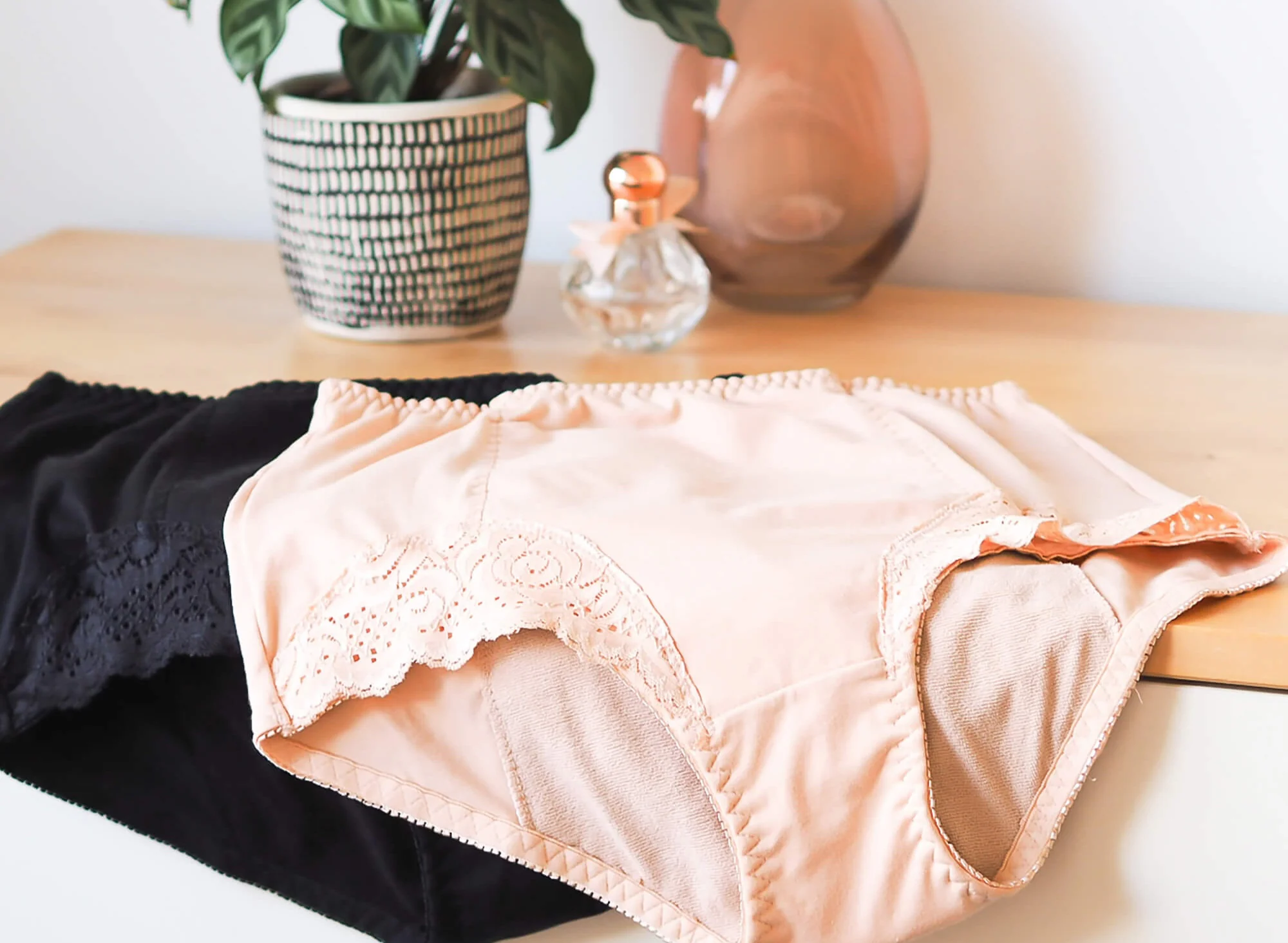
Period underwear has evolved from a niche wellness product to a mainstream retail staple. The category is driven by sustainability-conscious consumers ditching single-use menstrual products, and it is one of the fastest-growing segments in the intimate apparel market.
From a sourcing perspective, the key challenge is finding a factory with proven expertise in multi-layer absorbency construction and antimicrobial fabric treatments — capabilities that not every Chinese manufacturer possesses.
📖 Extended Reading: Looking for a Reliable Period Underwear Manufacturer? — What to look for in a production partner, which questions to ask, and how to evaluate absorbency performance claims.
5.2 Plus-Size Shapewear
Body-positive fashion has permanently shifted consumer expectations, and retail buyers who ignored plus-size shapewear even two years ago are now racing to catch up. The opportunity for B2B buyers is significant: margins are higher, competition is less intense than in standard sizing, and sizing expertise is a genuine competitive differentiator.
📖 Extended Reading: Why Is Plus-Size Shapewear Becoming a Must-Have in Your Product Line? — Market data, category growth forecasts, and how to source shapewear that actually fits and performs across extended size ranges.
5.3 Laser-Cut Seamless Bras
Laser-cut bras eliminate bulky seams and are ideal for wear under fitted clothing — making them a perennial top-seller across athleisure, basics, and premium lingerie. For sourcing buyers, the critical decisions revolve around fabric weight, laser-edge finishing precision, and silhouette variety.
📖 Extended Reading: 2026 Best 10 Laser-Cut Bra Styles: Top-Selling Designs & Sourcing Insights — The most commercially successful styles this year and what makes each one work in retail.
5.4 Sports Bras & Yoga Bras
The activewear market continues to expand, and performance bras sit at the intersection of fashion and function. But not all performance bras are the same — and ordering the wrong construction for your target consumer is a common and costly mistake.
📖 Extended Reading: Yoga Bra vs. Sports Bra: Differences, Benefits & How to Choose the Right One — A technical breakdown of construction differences, support levels, and which product is right for which consumer.
6. Choosing the Right Fabrics for Your Underwear Line
Fabric selection is arguably the most consequential decision in underwear development. It determines comfort, durability, care requirements, price point, and the environmental story you can tell your customers. Chinese manufacturers offer a wide spectrum of materials — here is how to navigate them.
6.1 Natural & Eco-Friendly Fabrics
There is strong and growing consumer demand for organic cotton, bamboo viscose, TENCEL™ Lyocell, and other naturally-derived materials. These fabrics command a premium price point and are particularly attractive for wellness-positioned and sustainability-led brands.
Sourcing them requires finding factories with appropriate certifications (GOTS, OEKO-TEX®) and verified raw material supply chains — not just factories that claim to use natural fibers.
📖 Extended Reading: Natural Fabric Underwear Guide: Types, Materials & Manufacturing in China — A complete reference on every major natural and semi-natural fabric used in underwear manufacturing, with sourcing notes for each.
6.2 Synthetic & Performance Fabrics (NIC)
NIC fabrics — Nylon, various Interlock blends, and performance stretch composites — are the backbone of seamless and stretch-fit underwear. Choosing the right NIC composition affects everything from softness and moisture-wicking to shape retention after repeated washing.
Always request a fabric data sheet and ask for wash-test results (minimum 20-wash test) before approving any fabric for bulk production. Color bleeding and elastic relaxation are the two most common fabric-related return reasons experienced by first-time importers.
📖 Extended Reading: How to Choose NIC Fabrics for Underwear — Technical guidance on fabric composition, denier weights, and the questions to ask your factory’s fabric team.
7. OEM vs. ODM: Understanding Your Manufacturing Options
One of the most misunderstood aspects of China sourcing is the difference between OEM and ODM — and choosing the wrong model for your stage of business wastes time and money.
OEM (Original Equipment Manufacturing) You provide the design, technical specifications, and branding. The factory manufactures to your exact instructions. Best for brands with strong in-house design capabilities and a clear product vision. Offers maximum control but requires more upfront investment in development.
ODM (Original Design Manufacturing) The factory owns existing designs that you can customize — colorways, branding, minor construction tweaks — and sell under your label. Best for speed-to-market situations or buyers without dedicated design teams. Lower development cost, faster first-to-shelf timeline.
Many Chinese manufacturers offer both models, sometimes within the same facility. The right choice often changes as your brand matures — many brands start ODM to validate a category and shift to OEM once they have the volume and design confidence to justify it.
📖 Extended Reading: How to Find Underwear OEM/ODM Suppliers in China — How to identify which model a factory specializes in, the right questions to ask during supplier qualification, and how to protect your designs regardless of which route you choose.
8. Quality Control: Your Last Line of Defense
Quality failures cost more than money — they damage customer relationships, generate expensive returns, and can result in regulatory action if non-compliant products reach retail shelves. A robust QC system is non-negotiable for any serious underwear importer.
The Three Inspection Points
Pre-Production Inspection Verifies raw materials and trims before cutting begins. Catches fabric quality issues, color deviations, and incorrect hardware before they become embedded in hundreds of finished garments.
During-Production Inspection (DUPRO) Checks the first pieces off the production line and identifies systematic construction defects early — while there is still time to correct them without delaying shipment.
Pre-Shipment Inspection (PSI) The most critical stage. A statistically representative sample of the completed order is inspected against your approved specifications before goods are loaded onto the container. This is your final opportunity to reject non-conforming product.
What to Inspect
- Stitching density, seam strength, and finish quality
- Elastic tension and recovery (measured after stretching to 200% three times)
- Color accuracy vs. your approved color standard (AQL 2.5 is industry standard for apparel)
- Size accuracy against your approved fit sample
- Label content: fiber composition, care instructions, country of origin
- Packaging: correct SKU tagging, folding method, and poly-bag specifications
📖 Extended Reading: Underwear Quality Control & Inspection: Ensuring Top Standards in China — A complete inspection checklist, AQL table explained, and how to brief a third-party inspection company.
9. Certifications That Open Market Doors
Certifications are not bureaucratic red tape — they are commercial assets. Major retailers, online marketplaces, and consumers increasingly require documented proof that underwear meets safety, environmental, and ethical standards. Here are the six that matter most:
OEKO-TEX® Standard 100 Certifies that every component of the garment — including threads, buttons, and dyes — has been tested for harmful substances. The most widely recognized textile safety certification globally, and a prerequisite for many EU and US retail buyers.
GOTS (Global Organic Textile Standard) Required for brands making genuine organic cotton or natural fiber claims. Covers both environmental and social criteria across the entire supply chain — from farm to finished product.
ISO 9001:2015 A quality management system certification demonstrating that a factory operates consistent, documented production processes. Particularly valued by retail buyers conducting formal due diligence on new suppliers.
bluesign® Focused on sustainable and responsible chemistry in fabric manufacturing. Increasingly requested by eco-conscious brands and Scandinavian and German retailers.
WRAP (Worldwide Responsible Accredited Production) An independent factory certification focused on social compliance — fair wages, safe working conditions, and legal employment practices. Important for any buyer with CSR-sensitive retail partners.
BSCI / amfori A leading social audit platform used by European retailers to assess factory conditions. Having a current BSCI audit report dramatically speeds up vendor onboarding with EU buyers and is sometimes a hard requirement for listing approval.
📖 Extended Reading: Power Your Brand: 6 Must-Have Underwear Certifications for Winning Manufacturers — How to verify, request, and leverage each certification in your supplier negotiations, plus which ones your target market actually requires.
10. The 7 Most Common Underwear Sourcing Problems — and How to Solve Them
Even experienced buyers encounter recurring challenges when sourcing underwear from China. Here are the seven most impactful, with proven solutions for each.
Problem 1 – Communication Breakdowns Solution: Invest in a bilingual sourcing agent or platform with built-in translation tools. More importantly, communicate everything in writing — always confirm verbal agreements via email or WeChat message, and never rely on phone calls alone.
Problem 2 – MOQ Mismatches Solution: If a factory’s MOQ exceeds your current budget, ask about shared production runs, reduced colorway commitments (fewer colors at higher per-color quantity), or staggered delivery schedules to spread the investment.
Problem 3 – Sample-to-Production Quality Gaps Solution: Specify in your purchase order that production must use fabric from the same bulk rolls — not specially sourced fabric — used in the approved sample. Conduct a pre-production inspection to verify this before cutting begins.
Problem 4 – Delivery Delays Solution: Build buffer time into every order (add 20–30% to the quoted lead time for your first few orders with a new factory). Diversifying across two complementary factories reduces single-source risk for your core products.
Problem 5 – IP and Design Theft Solution: Register your designs and trademarks in China (not just in your home country). Use non-disclosure agreements and limit sharing of detailed tech packs until a framework agreement is in place and verified.
Problem 6 – Hidden Costs Solution: Request an ex-works price plus a full itemized list of ancillary charges — tooling fees, labeling setup charges, inspection fees, packaging costs — upfront. Surprise costs are the most common complaint from first-time importers.
Problem 7 – Compliance Failures Solution: Require test reports from accredited third-party labs (SGS, Bureau Veritas, Intertek) — not factory self-testing — for every new product development. Include this requirement in your purchase order terms.
📖 Extended Reading: 7 Core Underwear Sourcing Problems in China and Systemic Solutions — Each problem explored in depth, with case studies and the operational systems that prevent them from recurring.
11. Building a Long-Term China Sourcing Strategy
Successful underwear sourcing is not about finding the cheapest factory for a single order — it is about building manufacturing relationships that give you a sustainable competitive advantage over time.
Consolidate Your Supplier Base Strategically
Working with 2–3 complementary factories — for example, one specialist in seamless construction, one in lace lingerie, one in performance bras — gives you category depth without unmanageable complexity. More than five active factories becomes difficult to manage without a dedicated in-house sourcing team.
Share Forecasts, Not Just Orders
Factories that know your 12-month forecast can plan fabric procurement, production capacity, and staffing in advance — which translates into better pricing, faster lead times, and priority treatment during peak seasons (typically Q3 for holiday production).
Invest in Relationships
Visit your top factories at least once a year. Meet the production manager, not just the sales team. Factories that know you as a committed, fair, and timely-paying customer will go the extra mile when problems arise — and in manufacturing, problems always eventually arise.
Stay Ahead of Regulatory Changes
The regulatory landscape for textile imports is constantly evolving — from EU Digital Product Passport requirements to US forced-labor supply-chain laws (UFLPA). Subscribe to industry newsletters and work with a customs broker who specializes in textile and apparel imports.
The brands that consistently outperform in private-label underwear treat their Chinese factory partners as strategic assets, not interchangeable vendors. Loyalty, transparency, and consistent payment terms create reciprocal advantages that are impossible to buy at any price point.
12. Your Complete Resource Hub
Every topic covered in this guide has a dedicated deep-dive article. Bookmark this section and return to it as you progress through your sourcing journey:
- Looking for a Reliable Period Underwear Manufacturer?
- Why Is Plus-Size Shapewear Becoming a Must-Have in Your Product Line?
- Underwear Supplier vs. Factory in China: Which Option Works Best for B2B Buyers?
- Underwear Sourcing China: Step-by-Step Guide for B2B Buyers
- 2026 Best 10 Laser-Cut Bra Styles: Top-Selling Designs & Sourcing Insights
- 7 Core Underwear Sourcing Problems in China and Systemic Solutions
- Yoga Bra vs. Sports Bra: Differences, Benefits & How to Choose the Right One
- Power Your Brand: 6 Must-Have Underwear Certifications for Winning Manufacturers
- Underwear Quality Control & Inspection: Ensuring Top Standards in China
- How to Find Underwear OEM/ODM Suppliers in China
- Natural Fabric Underwear Guide: Types, Materials & Manufacturing in China
- Best-Selling Underwear Brands in 2026
- Top 10 Underwear Manufacturers in China
- How to Choose NIC Fabrics for Underwear
Conclusion: Your Competitive Advantage Starts Here
The global underwear market is expected to surpass $100 billion by 2027. The brands that capture the most profitable share of that growth will not be the ones with the biggest budgets — they will be the ones with the best sourcing intelligence.
Sourcing underwear from China successfully requires more than finding a factory on Alibaba. It demands a systematic approach: deep category knowledge, rigorous supplier qualification, bulletproof quality control, and a long-term relationship mindset. This guide, together with the cluster articles linked throughout, gives you everything you need to build that system.
Union Source China specializes in connecting B2B buyers with verified, certification-ready underwear manufacturers across China. Whether you are placing your first order or scaling an established line, our team is here to shorten your learning curve and protect your margins.
Ready to source smarter? Contact Union Source China today and let us match you with the right manufacturing partner for your product line.

Dujuan is a sourcing specialist at UnionSource China, experienced in global procurement, product development and supplier coordination. She focuses on helping overseas buyers find quality products with reliable service, clear communication and efficient order follow-ups.