

Introduction: Understanding the Global Landscape of Converse Production
Few footwear brands have achieved the global recognition and cultural influence of Converse. Known for its iconic designs like the Chuck Taylor All Star, Converse has built a supply chain that spans continents — but its roots in Asia, particularly in China, remain strong. While manufacturing diversification has extended production to Vietnam, Indonesia, and India, China continues to play a critical role in maintaining the quality, consistency, and innovation that define the brand.
In today’s competitive sourcing environment, understanding how Converse Production operates provides valuable insights for importers, distributors, and brand owners seeking to replicate similar success. China’s advanced manufacturing infrastructure, skilled workforce, and integrated supplier ecosystem continue to make it the cornerstone of global footwear production.
This article explores the evolution of Converse production in China, the reasons behind its sustained dominance, and how importers can access comparable manufacturing capabilities through OEM and ODM opportunities. Whether you’re a sourcing manager or an entrepreneur in cross-border e-commerce, this analysis will help you uncover how China remains the reliable engine behind Converse’s global supply chain — and how you can benefit from its strengths in your own business strategy.
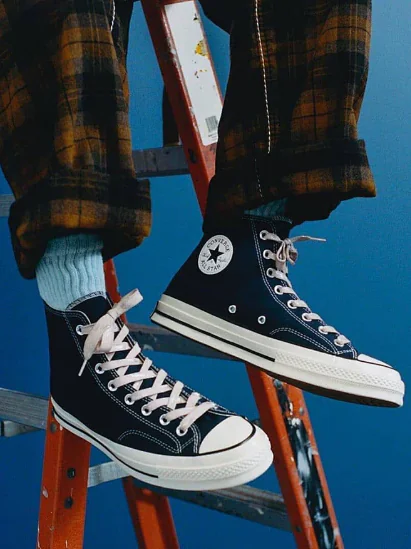
1. Where Are Converse Shoes Made Today?
1.1 Global Overview of Converse Production Locations
Converse, a footwear brand with more than a century of history, no longer manufactures primarily in the United States. Instead, its production footprint reflects the realities of global trade and the demands of mass-market distribution. Today, Converse Production is concentrated in Asia, with factories spread across China, Vietnam, Indonesia, and India. These locations are chosen strategically to balance manufacturing costs, labor availability, quality standards, and logistical advantages.
When asking “Where are Converse shoes made,” the answer points to a global sourcing strategy that mirrors the path taken by many international footwear brands. Vietnam and Indonesia have become prominent in recent years, supplying significant volumes of sneakers to North American and European markets. India, while still a smaller player, is positioning itself as a low-cost alternative with long-term potential for scaling production.
Despite this geographical diversification, China remains the cornerstone of Converse’s global output. Many importers prefer working through a China sourcing agent to streamline communication, negotiate better prices, and ensure consistent product quality. The country’s deep industrial base, efficient supply chain, and concentration of specialized footwear clusters make it difficult to replace. For decades, Converse manufacturing hubs in China have set the benchmark for quality and scalability, allowing the brand to meet both seasonal peaks and long-term growth in consumer demand.
For importers, understanding this distribution is critical. Working with factories in the same regions where global brands produce can unlock opportunities to leverage the same expertise, machinery, and production capacity. By studying how Converse has built a network of multi-country suppliers, businesses can better align their own sourcing strategies to balance cost, quality, and risk. In essence, the global overview of Converse’s production demonstrates how modern supply chains must be both diversified and anchored in trusted locations.
1.2 Why China Still Plays a Central Role Despite Diversification
Although Converse has diversified into Vietnam, Indonesia, and India, Converse production in China continues to play a leading role. The reasons are not only historical but also rooted in structural advantages that China has built over decades.
One of the most compelling factors is the integration of China’s footwear ecosystem. From raw material suppliers to component makers and assembly lines, the entire production chain operates within a tightly connected system. This allows factories to reduce lead times, control costs, and adapt quickly to changes in demand. Few other regions offer this level of efficiency.
Another factor is the advanced technical expertise present in Converse shoe factories China. Many of these facilities have invested heavily in automation, quality assurance, and compliance with international labor and environmental standards. For importers, this translates into reliable production that meets the strict requirements of global retailers.
China’s logistics infrastructure also strengthens its role. With major export hubs in Guangzhou, Shenzhen, and Shanghai, manufacturers can ensure rapid and predictable delivery to Western markets. Even as trade tensions and rising labor costs push brands to explore alternatives, China’s unmatched infrastructure and established business relationships keep it central to Converse’s strategy.
Finally, trust and long-term partnerships matter. Importers around the world continue to view Converse made in China as a symbol of consistency and quality. These relationships are built on decades of collaboration, making Chinese suppliers a reliable foundation in an otherwise shifting global landscape.
For international buyers, the lesson is clear: while diversification is necessary, China remains the anchor of the Converse supply chain Asia. It is not only about cost savings but about access to scale, expertise, and a proven track record that continues to make China indispensable in global footwear sourcing.

2. Main Production Regions: China, Vietnam, Indonesia, India
2.1 Strengths and Differences of Each Country
To understand the full scope of Converse Production, it is essential to analyze the strengths and weaknesses of the brand’s key manufacturing regions. Each country plays a specific role within Converse’s supply chain, offering unique advantages for importers to consider.
China: As the historic backbone of Converse manufacturing, China offers unmatched scalability and supply chain integration. Its industrial clusters ensure that everything from soles to packaging is available domestically, minimizing delays and costs. Chinese factories excel at high-volume production while maintaining consistent quality, making them trusted partners for both global brands and independent importers.
Vietnam: Vietnam has rapidly grown into one of the largest footwear exporters in the world. For Converse, it provides a cost-effective alternative to China, with competitive labor rates and favorable trade agreements with Western economies. While Vietnam’s infrastructure is still developing compared to China, the government’s active investment in manufacturing zones has made it a reliable option for global brands.
Indonesia: Known for its strong labor pool, Indonesia plays a vital role in producing lifestyle sneakers and casual footwear. While it lacks the same supply chain depth as China, its lower operating costs and established relationship with global sportswear brands ensure its place in Converse’s portfolio. Importers often find Indonesia attractive for mid-scale production runs where cost competitiveness is key.
India: Still an emerging player, India offers low labor costs and a large workforce. Its footwear industry is growing steadily, but challenges such as inconsistent quality and infrastructure gaps remain. For Converse, India represents a diversification strategy rather than a core hub, but for importers willing to build long-term relationships, the market offers significant potential.
By comparing these four regions, it becomes clear that Converse balances efficiency, cost, and risk across its global network. For importers, evaluating the strengths of each country allows them to make informed sourcing decisions, whether they prioritize speed, scale, or cost-effectiveness.
2.2 Shifting Supply Chain Strategies Across Asia
The distribution of Converse Production across multiple Asian countries is part of a deliberate strategy to adapt to the evolving global trade environment. Rising labor costs in China, coupled with geopolitical pressures, have encouraged brands to expand their footprint to neighboring countries like Vietnam and Indonesia. At the same time, the growth of India’s manufacturing base provides an additional layer of resilience.
However, this diversification does not diminish the role of China. Instead, it highlights the way global brands are managing supply chain risk while preserving access to established Converse manufacturing hubs. For instance, Vietnam may offer cost savings, but it cannot yet replicate the scale or infrastructure of China. Indonesia can handle specific product categories, but its logistics are less developed. India shows promise, but its learning curve remains steep.
For global footwear companies, the key is balance. Diversification ensures resilience, but reliance on China guarantees reliability. This dual approach has become the blueprint for modern sourcing strategies in the footwear sector. Importers who understand these shifts can better align with opportunities in both established and emerging markets.
The broader implication is that Converse supply chain Asia serves as a model for other international brands. By creating a distributed yet interconnected network, Converse has ensured that it can weather disruptions while continuing to deliver consistent quality worldwide. For importers, studying this strategy provides insights into how to approach supplier selection and market entry with a long-term perspective.
3. The Evolution of Converse Production and Supply Chain
3.1 From U.S. Roots to Asian Manufacturing Hubs
The history of Converse Production mirrors the transformation of the global footwear industry. Originally, Converse sneakers were entirely manufactured in the United States, with facilities in Massachusetts handling the design, assembly, and distribution. However, rising production costs and global consumer demand prompted a shift toward Asia, where labor costs were lower and manufacturing expertise was abundant.
By the late 20th century, China emerged as the primary hub for Converse shoe factories China, providing both scale and technical capability. Vietnam and Indonesia were later added to the network, offering flexibility and competitive labor rates. India, though still an emerging hub, is gradually being integrated to support long-term sourcing diversification.
This evolution reflects a strategic approach to global supply chain management. By spreading production across multiple countries, Converse reduces dependency on any single location while maintaining high-quality standards. Importers observing this model gain insights into how multi-country sourcing can balance cost, speed, and resilience.
3.2 How Global Trade Trends Influenced Sourcing Strategies
Global economic trends and trade policies have played a significant role in shaping the Converse supply chain Asia. Tariffs, international trade agreements, and regional labor market fluctuations have all influenced where and how Converse manufactures its footwear. Diversifying production across China, Vietnam, Indonesia, and India allows the brand to mitigate risks while responding to global market demands.
China remains central due to its mature supply chain ecosystem. Its combination of skilled labor, integrated material suppliers, and advanced machinery ensures consistent output. Meanwhile, Vietnam and Indonesia act as complementary hubs, providing alternative production capacity. India is considered a future-forward addition, expanding the global sourcing footprint while taking advantage of cost efficiencies and a growing workforce.
This carefully balanced network demonstrates the value of Converse Production strategies to both global brands and importers. Companies seeking to scale operations can learn from Converse’s approach to risk management, supplier selection, and operational efficiency.
4. Inside Converse Factories in China
4.1 Key Manufacturing Hubs
When it comes to Converse production in China, the country’s manufacturing ecosystem stands out for its scale and sophistication. Major production clusters are found in coastal regions such as Guangdong, Fujian, and Zhejiang, which have long histories in footwear manufacturing. These regions host large industrial zones where specialized suppliers for rubber soles, textiles, adhesives, and packaging operate side by side — creating a vertically integrated environment that minimizes costs and accelerates production cycles.
Factories within these Converse manufacturing hubs are equipped with state-of-the-art machinery for cutting, vulcanizing, and automated stitching. Advanced quality control systems track each stage of production, ensuring that even at large volumes, product standards remain consistent. This technological investment enables Chinese facilities to maintain global competitiveness while adhering to Converse’s strict brand standards.
Another defining characteristic of China’s production hubs is workforce expertise. Skilled labor in shoemaking is cultivated through decades of industrial experience and vocational training. Workers understand the nuances of materials, design, and finishing that define the Converse brand’s global appeal. Combined with efficient management systems and international audit compliance, these hubs represent the backbone of the brand’s reliability.
For importers seeking to replicate Converse’s sourcing success, identifying suppliers within these regions provides a strategic advantage. The ecosystem surrounding Converse shoe factories China ensures access to quality materials, flexible production capacities, and reliable logistics infrastructure — essential factors for any brand aspiring to scale in global markets.
4.2 Quality Standards and Production Capacity
The sustained reputation of Converse Production is deeply tied to the rigorous quality management systems implemented in its Chinese factories. Each facility operates under strict international certification frameworks such as ISO, BSCI, and WRAP, ensuring compliance with labor ethics, environmental standards, and material safety.
Quality control begins at the material sourcing stage. Rubber compounds, cotton textiles, and canvas undergo chemical and physical testing before being approved for use. During assembly, automated systems assist with precision tasks such as stitching and trimming, reducing human error and ensuring visual consistency across all batches.
The high capacity of Converse made in China facilities is another core strength. Many Chinese factories can produce millions of pairs annually while maintaining fast turnaround times. This scale enables Converse to meet global seasonal demands, launch limited editions, and maintain consistent stock levels in key markets.
From an importer’s perspective, this combination of efficiency and precision is what differentiates Chinese factories from newer competitors in Southeast Asia. Accessing similar production environments provides businesses the assurance of quality, scalability, and professional execution — qualities that define Converse’s manufacturing excellence.
5. Why China Remains a Major Base for Converse Production
5.1 Integrated Supply Chain and Infrastructure
China’s enduring position in Converse Production is no accident; it’s the result of decades of strategic investment in manufacturing infrastructure and supply chain integration. Unlike emerging hubs, China’s production ecosystem extends beyond footwear assembly — it includes specialized networks for every component, from textiles and soles to metal eyelets and laces.
These localized supply chains drastically reduce dependency on imports for raw materials, allowing Converse shoe factories China to operate with shorter lead times and greater cost efficiency. The presence of well-developed logistics channels — including major export ports in Shenzhen, Xiamen, and Shanghai — ensures smooth and timely global delivery.
Additionally, China’s industrial parks often provide centralized services such as warehousing, testing laboratories, and customs clearance support. This integration not only boosts productivity but also ensures compliance with international trade standards, making China the ideal foundation for global production strategies.
For importers, understanding this infrastructure is key. The model of Converse production in China demonstrates how leveraging a mature supply ecosystem can enhance stability, reduce risk, and achieve consistent performance at scale — essential for long-term competitiveness in the footwear and apparel industry.
5.2 Skilled Workforce and Technology Advantages
Beyond infrastructure, human expertise remains a defining asset. China’s shoemaking industry benefits from generations of skilled artisans and technicians who understand the fine balance between craftsmanship and efficiency. Workers are trained in material science, pattern making, and automated manufacturing systems, enabling seamless integration of technology with traditional production methods.
Factories also invest heavily in automation and smart manufacturing. From digital pattern cutting to 3D mold simulation and AI-based defect detection, these advancements enhance both precision and sustainability. The result is a high-tech environment where consistency and innovation coexist.
This fusion of experience and innovation allows Converse Production to maintain brand integrity while adapting to modern consumer expectations for quality and sustainability. It’s this dual strength — skilled labor and advanced technology — that solidifies China’s role as the global base for Converse and other international footwear brands.
6. Why Importers Still Trust Chinese Factories
6.1 Consistency, Scalability, and Reliability
Importers worldwide continue to view Chinese suppliers as benchmarks of quality and trust. The foundation of this trust lies in the proven performance of Converse Production, which exemplifies how reliability, scalability, and compliance can coexist in a competitive manufacturing environment.
Chinese factories have demonstrated an unmatched ability to deliver large volumes while maintaining quality consistency. Whether producing iconic models like the Chuck Taylor All Star or customized designs for regional markets, Converse made in China facilities ensure uniform results. This consistency reassures importers that their production will meet specifications without costly rework or delays.
Another factor is scalability. Factories can easily adjust production capacity based on seasonal or promotional demand, offering flexibility rarely seen in less-developed regions. Combined with transparent communication, on-site audits, and robust quality control, this scalability builds long-term confidence among global importers.
6.2 Long-Term Partnerships and Global Standards
Beyond transactional manufacturing, many Chinese suppliers foster strategic relationships with importers. They offer R&D support, prototype development, and packaging solutions — transforming from simple vendors to full-service manufacturing partners.
Importers who have worked with Converse shoe factories China often highlight their ability to align with brand values and regulatory standards. Factories undergo regular third-party audits and certifications to maintain international compliance, ensuring safe and ethical production.
For businesses entering the global market, partnering with such experienced factories reduces risk, enhances credibility, and ensures production reliability. The continued success of Converse Production in China serves as a case study of how long-term cooperation and mutual trust can drive sustained global growth.
7. OEM/ODM Opportunities in Converse Supply Chain Asia
7.1 Working with Factories Producing for Global Brands
The established infrastructure supporting Converse Production across Asia provides valuable opportunities for importers through OEM (Original Equipment Manufacturer) and ODM (Original Design Manufacturer) models. Many factories that produce for Converse also collaborate with smaller brands or start-ups seeking high-quality footwear production.
OEM models allow importers to bring their own designs and have them manufactured using the same advanced systems trusted by global brands. Meanwhile, ODM arrangements enable companies to purchase existing designs, rebrand them, and enter the market faster — ideal for testing product concepts or expanding product lines.
Partnering with factories in Converse manufacturing hubs like China and Vietnam grants access to world-class production techniques, premium materials, and proven logistics frameworks. For new importers, this lowers entry barriers while ensuring professional output comparable to major brand standards.
7.2 Can Importers Access the Same Suppliers as Converse?
While some factories exclusively handle large brand contracts, many diversify their client portfolios to balance production schedules. This means smaller importers can often negotiate with facilities that also serve major players like Converse — provided they meet minimum order quantities and compliance requirements.
Working with these suppliers not only ensures superior craftsmanship but also connects importers to advanced technologies and experienced production teams. The result is access to Converse shoe factories China standards — including durability, finish quality, and international compliance — at a fraction of traditional brand costs.
For entrepreneurs and sourcing managers, these OEM/ODM collaborations represent a strategic gateway to entering or scaling within the global footwear market. By leveraging Asia’s proven Converse Production ecosystem, importers can build competitive, high-quality product lines that resonate with international consumers.
Conclusion: Why China’s Footwear Factories Still Set the Global Standard
As the global footwear industry evolves, one fact remains clear — Converse Production continues to exemplify the advantages of a well-structured, reliable supply chain rooted in Asia. China’s long-standing expertise, world-class infrastructure, and adaptability have kept it at the forefront of the footwear manufacturing world, even as other regions emerge.
For importers, the success of Converse shoe factories China is more than a case study; it’s a roadmap. The same suppliers, techniques, and systems that power Converse’s global production can be leveraged to build your own brand with lower risk and higher efficiency. Whether you’re seeking consistent quality, scalable capacity, or ethical manufacturing partnerships, China remains a trusted destination for professional sourcing.
If your business is ready to explore reliable manufacturing options similar to Converse production in China, our sourcing team can help you connect with certified suppliers and navigate every stage — from product development to quality inspection and logistics.
Contact us today to discover how to source smarter, minimize risks, and grow your brand through trusted Chinese factories that continue to set the standard in global footwear production.

Berry Bian, Marketing Director at UnionSource, brings years of experience in global sourcing and brand strategy. Berry focuses on analyzing market trends and sharing insights that help international buyers and business partners stay ahead in the fast-changing world of wholesale trade.