

Induction
Have you ever wandered the aisles of a dollar store, filling your cart with unbelievable deals, and wondered, “How do they do it?” In an era of rising inflation, the ability of these chains to keep prices locked at a dollar or just above seems almost magical. But the truth is, there’s no magic involved—only a meticulously engineered business model built on razor-thin margins and global savvy.
The secrets lie in a powerful combination of consumer psychology, incredibly efficient supply chains, and strategic partnerships with manufacturers in China and other low-cost countries. From private label products and cleverly designed smaller packaging to sourcing massive quantities of overstock and closeouts, every tactic is designed to slash costs to the bone.
In this article, we pull back the curtain. We’ll reveal how dollar stores master their supply chain, why so many of their products originate in hubs like Yiwu and Guangzhou, and what importers and retailers can learn from their playbook. The answer might just inspire your next sourcing strategy.

1. The Allure of the Dollar Store
What is the real secret behind the irresistible pull of the dollar store? It’s not just about low prices; it’s a masterclass in consumer psychology. These stores are expertly designed to make you feel like a savvy shopper, uncovering hidden gems for a fraction of the cost. But this feeling of triumph is no accident. It’s the foundational strategy that allows them to thrive while keeping their prices shockingly low. In this chapter, we’ll decode the subtle tricks and core business principles that make the dollar store model so powerfully alluring and profitable.
1.1 The Psychology of a Steal: How Low Prices Hook Consumers
The success of Dollar Stores isn’t just an economic phenomenon; it’s a psychological one. These retailers have masterfully tapped into powerful cognitive biases that make shoppers not just willing, but eager, to buy. The core of their strategy lies in the “low-price guarantee.” When every item is visibly and consistently cheap, it eliminates the mental effort of comparison shopping. The brain interprets this as a low-risk, high-reward environment, triggering a sense of freedom and opportunity.
This feeling is amplified by what behavioral economists call the “treasure hunt” effect. The constantly rotating stock of goods—from seasonal decorations to unexpected closeouts—creates a sense of urgency and novelty. Shoppers aren’t just purchasing a product; they’re scoring a unique find. This psychological trigger encourages impulse buys and larger basket sizes, effectively making up for the razor-thin margins on any single item. It’s this clever manipulation of consumer psychology that transforms a simple shopping trip into a rewarding experience, ensuring customers keep coming back for that next thrilling steal.
This emotional engagement is crucial, but it’s only one part of the equation. Once hooked, how do Dollar Stores physically deliver on this promise without going bankrupt? The answer lies in the ruthless efficiency of their operations, starting with the products themselves—often in surprisingly smaller packages.
1.2 More Than a Dollar: The Real Strategy Behind Consistently Low Prices
While consumer psychology lures shoppers in, the real magic of how dollar stores keep prices low is a ruthlessly efficient operational blueprint. The iconic price point is not a limitation but a powerful discipline. It forces an uncompromising focus on cost-cutting at every level, creating a business model that is as ingenious as it is rigid.
The strategy rests on three pillars. First, extreme volume: by ordering massive quantities of the same low-cost products, they achieve tremendous buying power, pushing manufacturers for the absolute lowest unit cost. Second, breathtaking supply chain efficiency; their dollar store supply chain secrets involve streamlined logistics and minimal handling to slash overhead. Finally, a masterful use of data allows them to identify and stock only the fastest-moving items, ensuring rapid inventory turnover. This trifecta transforms the challenge of a one-dollar price tag into a scalable, profitable empire.
But this leads to a critical question: where and how can they possibly source such vast volumes of goods that meet this strict cost structure? The answer lies thousands of miles away, in the global hubs of mass production. To truly understand, we must look to the factories and sourcing agents for dollar store products in China and beyond, where the principles of cost and scale are executed to perfection.
2. Cracking the Code: Core Strategies for Rock-Bottom Prices
The psychological allure sets the stage, but the real engine of the dollar store empire is a set of ruthless operational strategies. So, how do they physically deliver those incredibly low prices day after day? The answer lies in a masterful manipulation of products, supply chains, and branding. In this chapter, we move from the shopping cart to the backroom, cracking the code on the core tactics that make the entire model possible. We’ll expose how smaller packaging creates the illusion of value, how their supply chain secrets achieve unparalleled efficiency, and how a strategic shift to private label products allows them to cut out brand-name markups for good. Prepare to see the dollar store aisle in a whole new light.
2.1 The Power of Smaller Packaging and Lower Quantities
One of the most immediate and subtle tricks Dollar Stores employ to maintain their rock-bottom prices is the strategic use of smaller packaging. While a bottle of shampoo or a bag of chips might look familiar, a closer look often reveals a significantly smaller size or count compared to those sold in conventional supermarkets. This isn’t an accident; it’s a calculated move known as “shrinkflation.” By reducing the quantity per unit, suppliers and the stores themselves can keep the final price point at that magical one-dollar threshold, even as their own costs rise. This practice allows them to navigate inflation without scaring away price-sensitive shoppers.
But the benefits go beyond mere psychology. Smaller packaging is a logistical masterstroke for the dollar store supply chain. Compact and lightweight items are cheaper to ship and store, allowing for more products to be stacked in a single container and on store shelves. This maximizes inventory density and reduces per-unit freight costs, which are critical factors in preserving their razor-thin profit margins. It’s a direct, physical manifestation of how dollar stores keep prices low, making the entire system leaner and more efficient from the factory floor to the final sale.
However, manipulating package size is just the first layer of cost-cutting. To truly achieve the scale needed for profitability, these retailers must master a far more complex global game—one that involves sourcing millions of identical items at unthinkably low prices. This leads us directly into the core of their operation: the secrets of their global supply chain and the relentless pursuit of volume.
2.2 Secrets of the Supply Chain: Speed, Volume, and Efficiency
If smaller packaging is the tactical move, then the dollar store supply chain secrets form the grand strategy. The entire system is engineered around two non-negotiable principles: immense volume and ruthless speed. By committing to massive quantities of the same low-cost products, dollar stores achieve unparalleled buying power, allowing them to strong-arm manufacturers into the absolute lowest possible prices. This volume-based model is the bedrock of their entire pricing structure.
But buying cheap is only half the battle. Moving goods quickly is what seals the profit. Their supply chains are stripped of all but the essentials, minimizing handling and storage time. Products often move directly from overseas containers to regional distribution centers and onto store shelves in a meticulously choreographed flow. This hyper-efficiency slashes warehousing costs and reduces the capital tied up in inventory, allowing for a faster turnaround. It’s a high-velocity, low-cost loop that continuously feeds the stores’ need for new merchandise.
Mastering this logistics ballet is what makes the dollar store model scalable and defensible. Yet, this relentless focus on cost and volume inevitably raises a critical question about the origins of these goods. To truly understand how such a system is sustained, we must turn our gaze to the global manufacturing powerhouses and the strategic use of private label products that give these retailers ultimate control over their inventory and margins.
2.3 Mastering Private Labels: Cutting Out the Middleman
While supply chain efficiency handles the cost of movement, the strategic pivot to private label products is how dollar stores attack the cost of the products themselves. By developing their own in-house brands, they completely eliminate the premium associated with big-name manufacturers. This is the ultimate power move: cutting out the middleman and its associated marketing and branding costs. The result is direct control over production, pricing, and profit margins, allowing them to offer prices that branded competitors simply cannot match.
This model thrives on low-cost manufacturing, predominantly in countries like China, Vietnam, and India. Dollar stores leverage their massive order volumes to commission factories in these regions to produce goods to their exact, no-frills specifications. This focus on function over flair is key. By stripping away expensive packaging and non-essential features, they get a product that performs the core task at a fraction of the cost. This direct partnership with manufacturers is the culmination of their cost-cutting strategies, merging volume buying with production control.
However, this relentless drive for the lowest possible price point through private labels and cheap manufacturing inevitably leads to a critical conversation. What are the hidden trade-offs of this model? The focus on cost above all else forces a careful balancing act with product quality and durability, a tension that shapes consumer perception and brings us to the heart of the dollar store debate.
3. The Global Manufacturing Engine
Having uncovered the strategies of private labels, we must now ask: where does this massive volume of low-cost goods actually originate? The answer propels us across the globe to the world’s factory floor. Dollar stores are inextricably linked to the power of cheap manufacturing in China and other cost-competitive nations. But why these specific locations, and how do they consistently deliver the scale and prices that the model demands?
In this chapter, we dive into the heart of the global manufacturing engine. We’ll explore the pivotal reasons why many dollar store products come from China, examining the unmatched ecosystem of suppliers and raw materials. We’ll also look at the growing roles of Vietnam and India in this low-cost landscape. Finally, we’ll address the unavoidable question of quality that arises from this relentless pursuit of the lowest possible cost. Prepare to trace the journey of a dollar store item back to its source.
3.1 Why China is the Heart of Dollar Store Manufacturing
When it comes to supplying the endless aisles of dollar stores, China’s supply chain is not just an option—it’s the indispensable core. The sheer scale, speed, and sophistication of its manufacturing ecosystem are unmatched. For dollar stores that rely on massive quantities of the same low-cost products, China offers a complete package: unparalleled production capacity, deeply integrated supply networks for raw materials, and a workforce specialized in high-volume, low-margin consumer goods.
Key to this are hubs like the Yiwu Market, a sprawling wholesale city where countless small commodities are traded, and the industrial powerhouses of Guangzhou and Shenzhen. These centers provide dollar stores and their sourcing agents with a one-stop shop to procure everything from stationery to kitchenware at rock-bottom prices. The ability to source a vast range of products from a concentrated geographic region drastically simplifies logistics and minimizes costs, making it the most efficient engine for cheap manufacturing in the world.
This deep reliance on China is a calculated decision, driven by the uncompromising need for volume and affordability. However, it also introduces questions about diversification and risk. This leads us to examine how other nations are emerging as supporting players in this global production network, and the trade-offs that come with this relentless focus on cost.
3.2 Beyond China: The Role of Vietnam and India in Low-Cost Production
While China remains the dominant force, the landscape of cheap manufacturing is steadily evolving. Rising labor costs and geopolitical tensions have prompted dollar stores and their sourcing agents to actively diversify their supply bases. This strategic shift has positioned Vietnam and India as crucial alternative hubs for low-cost manufacturing, each offering distinct advantages that complement the China-centric model.
Vietnam has emerged as a leader in textiles, footwear, and furniture, attracting significant investment with its competitive wages and proactive trade agreements. Similarly, India boasts a massive domestic market and a powerful manufacturing base, particularly for pharmaceuticals, home goods, and textiles. For importers, leveraging this diversified approach is a key lesson in building a resilient supply chain. By spreading production across multiple countries, businesses can mitigate risk and secure the best possible costs, a tactic central to the dollar store playbook.
This global diversification strategy is vital for maintaining the flow of low-cost products. However, sourcing from multiple international suppliers introduces new complexities in logistics, quality control, and communication. Successfully navigating this expanded field requires expertise and on-the-ground support—a challenge that brings the role of the professional sourcing agent into sharp focus, which we will explore in a later chapter.
3.3 The Truth About Quality and Cost in Mass Production
The relentless drive for the lowest possible price point, achieved through massive quantities of the same low-cost products from global factories, inevitably leads to a critical examination of dollar store quality issues. This is the fundamental trade-off at the heart of the business model. To meet the stringent cost targets set by retailers, manufacturers are often compelled to use less durable materials, simplify designs, and implement minimal quality control checks. The result is products that fulfill a basic function but may lack the longevity or performance of their higher-priced counterparts.
This inherent tension between cost and quality is a calculated risk. Dollar stores understand that their core customer prioritizes immediate affordability over long-term durability for many disposable or infrequently used items. However, this strategy also fuels the common perception of inferior quality. For importers and retailers learning from this model, the key takeaway is balance. Understanding the direct correlation between manufacturing cost and product integrity is crucial. It highlights the importance of clear communication with suppliers and sourcing agents to define and enforce minimum quality standards that protect brand reputation, even at the bottom of the market.
This exploration of the quality-cost dilemma naturally leads to a deeper dive into the mechanics of procurement. How do dollar stores and other buyers actually navigate these vast, complex global supply chains to find the right suppliers and manage these inherent trade-offs? The answer lies in the sophisticated world of professional sourcing.
4. Inside the Sourcing Machine
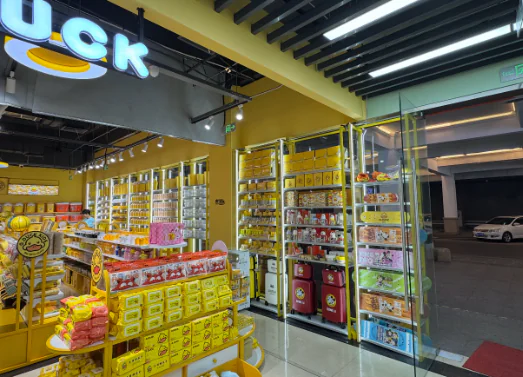
Understanding the why behind global manufacturing leads to an even more critical question: how do dollar stores consistently tap into this pipeline of ultra-low-cost goods? The answer lies in a sophisticated sourcing operation that is equal parts art and science. This chapter pulls back the curtain on the procurement engine that powers the entire model.
We will venture into the world’s largest wholesale markets, like Yiwu Market, and explore how overstocks and closeouts from big brands become dollar store inventory. Most importantly, we will demystify the pivotal role of the sourcing agent for dollar store products—the key that unlocks China’s supply chain and manages the intricate process of turning a factory order into a shelf-ready product. This is where the theoretical strategies of cost-cutting become a logistical reality.
4.1 From Yiwu to Guangzhou: Navigating China’s Vast Supply Hubs
For any importer seeking to replicate the success of dollar stores, understanding China’s physical marketplace is paramount. At the heart of this ecosystem is the legendary Yiwu Market, a sprawling wholesale city offering over 2.1 million product types. For dollar store products, Yiwu is a one-stop treasure trove for small commodities, from party favors to kitchen gadgets, all available in the massive quantities required. Its sheer concentration of suppliers allows for unparalleled price comparison and efficient bulk purchasing, forming the bedrock of low-cost sourcing.
Complementing Yiwu are the industrial powerhouses of Guangzhou and Shenzhen. These metros are hubs for electronics, hardware, and higher-value consumer goods, boasting advanced manufacturing capabilities and international trade fairs. Navigating these vast, complex supply chains, however, requires local expertise. This is where the strategic value of a sourcing agent becomes undeniable. They act as a bridge, leveraging local knowledge to identify reliable factories, negotiate prices, and ensure quality, effectively unlocking the full potential of China’s supply chain for global buyers.
Mastering these physical hubs is fundamental, but it’s only one procurement channel. The most agile players in the market also capitalize on unexpected opportunities, turning other companies’ surplus into their own stock, a tactic we will explore next.
4.2 The Goldmine of Overstocks and Closeouts
Beyond the constant churn of mass-produced goods, a secondary market provides a critical stream of inventory for dollar stores: the world of overstocks and closeouts. These are products from big brands that, for various reasons, need to be cleared out rapidly—perhaps due to a canceled order, a packaging change, a seasonal line that didn’t sell, or a minor overproduction. For mainstream retailers, this excess is a problem; for dollar stores, it’s a golden opportunity.
This channel serves as a strategic advantage in several ways. It allows dollar stores to offer occasional, branded-name products at a fraction of their original price, creating exciting “wow” moments for customers and enhancing the treasure hunt experience. More importantly, purchasing these lots is incredibly cost-effective. Since the brands are primarily looking to recoup some cost and free up warehouse space, they sell these goods at a massive discount. This provides dollar stores with high-perceived-value merchandise while strictly adhering to their low-cost procurement model.
While opportunistic, this tactic is a masterclass in agile sourcing. However, relying solely on the unpredictable availability of closeouts is not a sustainable strategy for filling shelves week after week. To ensure a consistent and controllable flow of core products, retailers must combine this with a more direct and commanding approach—the development of their own private label products, which we’ve previously explored, a process heavily reliant on expert sourcing agents.
4.3 How Sourcing Agents Unlock the Best Deals
Navigating the complexities of Yiwu Market, negotiating in Guangzhou factories, and spotting value in overstocks is a full-time job. This is where the specialized role of a sourcing agent for dollar store products becomes the ultimate strategic advantage. These agents are not just middlemen; they are on-the-ground experts who act as an importer’s eyes, ears, and negotiators within China’s supply chain. They possess the local knowledge and network that foreign buyers simply cannot replicate on their own.
A proficient sourcing agent does more than just find suppliers. They are instrumental in achieving the core goal of how dollar stores keep prices low. They leverage their relationships to negotiate the absolute best prices for massive quantities, conduct rigorous factory audits to mitigate risk, and implement essential quality control checks to prevent the most severe dollar store quality issues. They manage the entire process from sample approval to final shipment, ensuring logistical efficiency and protecting the buyer’s investment.
The value of an agent transforms sourcing from a transactional headache into a strategic partnership. This expertise is not just for retail giants; it’s the very tool that can empower any importer or retailer to compete effectively. As we shift our focus from how dollar stores operate to what others can learn, the decision to work with sourcing agents in China stands out as the most critical takeaway for building a resilient, cost-competitive supply chain.
5. The Hidden Trade-Offs
The dollar store model, with its relentless focus on cost and efficiency, delivers undeniable value to consumers. But what is the real price of a one-dollar product? Behind the scenes of this highly successful business strategy lie significant compromises that extend beyond the store shelf. In this chapter, we move beyond the operational mechanics to examine the consequences of this low-cost paradigm.
We will confront the persistent dollar store quality issues that consumers encounter and analyze the long-term value of these purchases. Furthermore, we will pull back the curtain on the broader implications, including the environmental impact of disposable goods and the ethical questions surrounding cheap manufacturing practices. Understanding these trade-offs is essential for forming a complete picture of the true cost of the items that fill the aisles.
5.1 The Quality Question: Are Low Prices Worth It?
The most immediate trade-off for consumers is the direct impact on product integrity, leading to persistent dollar store quality issues. To achieve rock-bottom prices, manufacturers often use less durable materials, thinner plastics, and simplified components. While this makes items affordable, it frequently results in products that are single-use or have a significantly shorter lifespan than their branded counterparts. A toy might break after a few uses, or a kitchen tool might bend under pressure.
This creates a complex value calculation for shoppers. For disposable items like party supplies or basic cleaning tools, the low cost may justify the limited durability. However, for goods where safety or longevity matters, the “bargain” can be illusory. The constant need to replace faulty items can ultimately cost more than investing in a higher-quality product initially. This inherent tension is the core dilemma of the dollar store model: the very strategies that enable low-cost manufacturing and massive quantities often directly compromise the reliability and durability of the final product, forcing consumers to balance immediate savings against long-term value.
5.2 The Environmental and Ethical Cost of Cheap Goods
Beyond the immediate product quality lies a broader, more systemic cost. The business model reliant on massive quantities of the same low-cost products creates a “disposable culture” with significant environmental consequences. The constant churn of cheaply made, short-lived goods—often in excessive plastic packaging—generates immense waste, straining landfills and recycling systems. This cycle of consumption, driven by the need to continuously replenish low-cost products, carries a heavy ecological footprint.
Furthermore, the relentless pressure for cheap manufacturing in China and other cost-competitive countries raises critical ethical questions. To meet the demanding price points and production schedules of dollar stores, factory working conditions, labor rights, and safety standards can be compromised. The pursuit of the absolute lowest cost often externalizes the true price of production, shifting the burden to the environment and the workforce. This creates a hidden cost that is not reflected on the price tag but is paid by society at large.
Understanding these hidden trade-offs is crucial for any business looking to emulate this model responsibly. It highlights that sustainable success requires more than just cost-cutting—it demands a conscious approach to sourcing. This leads directly to the final question: what can importers and retailers truly learn from the dollar store phenomenon, and how can they apply these lessons more ethically and strategically?
6. Lessons for Importers and Retailers
Now that we’ve unveiled the secrets, strategies, and trade-offs behind the dollar store phenomenon, the critical question remains: What can you, as an industry professional, take away from this? While replicating their entire model may not be your goal, the core principles of their success are universally valuable. This chapter distills these powerful lessons into actionable insights for your business.
We will explore how to adapt their ruthless supply chain efficiency and volume-driven sourcing tactics to your own operations. Most importantly, we will demonstrate why partnering with a professional sourcing agent in China is the single most effective strategy to unlock these benefits, providing you with the competitive edge needed in today’s market. The dollar store playbook is ready for you to study—here’s how to apply it.
6.1 What Your Business Can Learn from the Dollar Store Model
The success of dollar stores offers a masterclass in operational efficiency that any importer or retailer can study. The first crucial lesson is the power of simplification. By focusing on massive quantities of the same low-cost products, they achieve tremendous economies of scale and streamline their entire supply chain. This principle can be adapted by consolidating your product lines and ordering in larger volumes for core items to secure better pricing and reduce logistical complexity.
Furthermore, their mastery of the dollar store supply chain underscores the importance of speed and leanness. Minimizing inventory holding times and optimizing logistics are universal goals. Embracing their strategic use of private label products is another key takeaway. Developing your own branded lines, sourced through low-cost manufacturing partnerships, allows you to control costs, differentiate your offerings, and build brand loyalty, moving beyond competing solely on price for generic goods.
These strategies—volume consolidation, supply chain optimization, and private label development—form a powerful toolkit. However, implementing them, especially in complex overseas markets, requires specific expertise. This realization naturally leads to the most practical insight: the strategic value of local partners who can turn these lessons into reality.
6.2 Your Key to Success: Partnering with a Sourcing Agent in China
Understanding the theory behind the dollar store model is one thing; executing it effectively is another. The single most impactful step importers can take is to work with sourcing agents in China. These professionals are the practical bridge between your business goals and the vast, complex China’s supply chain. They possess the on-the-ground expertise that is crucial for navigating markets like Yiwu and Guangzhou, and for managing the intricacies of cheap manufacturing that make the dollar store model possible.
A proficient sourcing agent for dollar store products does more than find suppliers. They become your strategic partner, leveraging local networks to negotiate better prices, conduct rigorous factory audits to mitigate quality issues, and ensure consistent production of your private label products. They handle logistics, quality control, and communication, transforming the daunting challenge of international procurement into a streamlined, efficient process. This allows you to focus on your core business while securing the competitive pricing and reliable supply that are essential for success.
For any importer or retailer looking to compete on value and efficiency, this partnership is not just an option—it’s the ultimate takeaway from the dollar store playbook. It’s the key that unlocks the same competitive advantages, enabling you to build a resilient, cost-effective global supply chain tailored to your specific needs.

Berry Bian, Marketing Director at UnionSource, brings years of experience in global sourcing and brand strategy. Berry focuses on analyzing market trends and sharing insights that help international buyers and business partners stay ahead in the fast-changing world of wholesale trade.