

1. Why Should You Care About Where Nike Shoes Are Made?
In the global international trade landscape, understanding where are Nike shoes made is far more than a casual curiosity—it’s a strategic insight for importers, retailers, and even savvy consumers. For businesses in the sports footwear supply chain, production locations directly influence costs, lead times, and compliance with international trade regulations. For example, a U.S.-based importer deciding between sourcing from Vietnam or China must weigh factors like tariffs, shipping distances, and local manufacturing capabilities—all tied to where Nike’s shoes are produced.
Beyond business decisions, this knowledge sheds light on brand accountability. Today’s consumers increasingly prioritize ethical production and sustainability, making manufacturing locations a key factor in purchasing behavior. If a consumer learns that a pair of Nike shoes is made in a region with strong labor protections, it may reinforce brand loyalty; conversely, concerns about working conditions in a specific location could drive them to competitors. Additionally, understanding Where are Nike shoes made helps stakeholders anticipate market shifts—such as when Nike adjusted production across Asia during supply chain disruptions, a move that impacted importers worldwide.
1.1 How Production Locations Impact Consumer Choices
Consumer preferences in the global sports footwear market are increasingly shaped by production origins, a trend that international trade professionals (foreign trade professionals) cannot ignore. For instance, some consumers associate “Nike shoes made in China” with a balance of quality and affordability, thanks to China’s mature manufacturing infrastructure. This perception influences purchasing decisions: a 2023 survey of global sneaker buyers found that 42% actively check production labels, with 31% noting that “made in China” or “made in Vietnam” affects their willingness to pay.
Production locations also signal compliance with standards. Consumers concerned about environmental sustainability may favor Nike shoes made in regions with strict emissions regulations—like certain provinces in China that have invested in green manufacturing. For importers, this means aligning sourcing with consumer values: if demand for ethically produced shoes rises, partnering with factories in locations known for responsible practices (such as verified Nike shoes factories in China) can give businesses a competitive edge. Moreover, production locations impact availability: shoes made in closer proximity to target markets (e.g., Chinese factories supplying Asian retailers) often have shorter delivery times, a key selling point for time-sensitive consumers.
1.2 What It Means for Understanding Nike’s Global Dominance in Sports Footwear
Nike’s status as a global leader in sports footwear is deeply intertwined with its manufacturing location strategy—and grasping this connection is critical for anyone in the international trade industry. The brand’s ability to optimize Nike manufacturing locations across Asia (including China, Vietnam, and Indonesia) has allowed it to scale production, reduce costs, and respond quickly to market demands—all pillars of its dominance. For example, by leveraging China’s vast network of China sports shoe suppliers, Nike can access specialized materials and skilled labor, enabling the production of innovative designs (like its Flyknit technology) at scale.
This location strategy also supports Nike’s supply chain resilience, a key factor in maintaining market share. During global disruptions (such as the 2020 pandemic), Nike’s diversified manufacturing base allowed it to shift production from hard-hit regions to operational hubs—like relying more on Chinese factories when Vietnam faced lockdowns. For international trade professionals, this demonstrates how strategic manufacturing locations are not just about cost-cutting, but about securing long-term competitiveness. Additionally, Nike’s presence in major production hubs like China helps it stay connected to key consumer markets: producing locally reduces import barriers and allows for faster adaptation to regional trends (e.g., designing shoes for Asian consumers’ fit preferences). In short, understanding where Nike makes its shoes reveals the operational backbone of its global dominance—essential knowledge for businesses looking to compete or partner in the sports footwear industry. .
2. What Makes Up Nike’s Global Manufacturing Network?
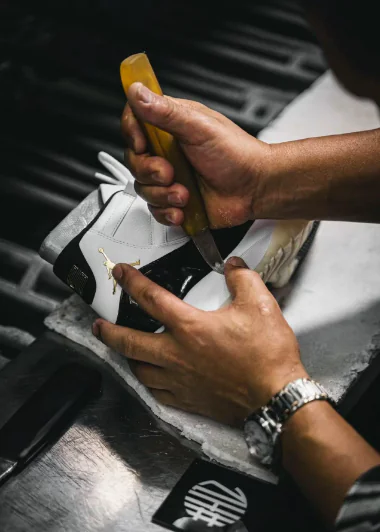
Nike’s global manufacturing network is a textbook example of strategic supply chain design, built around a contract manufacturing model that prioritizes agility, specialization, and geographic diversification. Unlike vertically integrated brands, Nike partners with 500+ independent factories worldwide—85% in Asia—to produce its footwear, focusing on core strengths of design, marketing, and quality oversight. At its core, the network links three critical components: specialized production hubs (tailored to technologies like Flyknit), proximity to raw materials (e.g., rubber in Southeast Asia, textiles in China), and seamless logistics integration with key consumer markets. For international trade (international trade) professionals, this structure reveals how to balance cost efficiency with innovation—lessons mirrored by leading China sports shoe suppliers and global manufacturers alike. Understanding this network also answers the fundamental question: Where are Nike shoes made? The answer lies in this interconnected ecosystem of Asian factories, with China and Vietnam as primary pillars.
2.1 Key Stages in Building Nike’s Worldwide Production System
Nike’s manufacturing expansion traces the evolution of global trade, starting with Japan in the 1960s. Founder Phil Knight’s insight—partnering with Japanese factories for high-quality, low-cost shoes—launched the brand’s offshoring strategy. By the 1980s, rising Japanese labor costs shifted production to South Korea and Taiwan, before a pivotal move to China in 1981. China quickly became a linchpin: Nike shoes made in China dominated global output by the 2000s, with nearly 200 factories across Fujian, Guangdong, and Jiangsu employing 200,000+ workers. The 2010s brought further diversification to Vietnam (now the top producer) amid China’s rising wages, but China remains integral to Nike supply chain China—evidenced by 2025 partnerships with Chinese firms for sustainable logistics. This journey underscores a key international trade lesson: Nike manufacturing locations evolve with labor costs, policy incentives, and industrial maturity.
2.2 How the Network Supports Nike’s Sports Footwear Leadership
The network is Nike’s competitive backbone, enabling two critical advantages: innovation at scale and market agility. By partnering with specialized Nike shoes factories in China and Vietnam, Nike turns lab breakthroughs (e.g., Air cushioning) into mass-produced products. Lean manufacturing practices reduce waste and speed up prototyping, letting Nike launch hits like the Pegasus Premium in months—not years. Sustainability further strengthens leadership: Nike’s China supply chain now includes green logistics hubs and carbon-neutral production, aligning with global “双碳” (dual carbon) goals. For importers, this demonstrates how a distributed network mitigates risks—e.g., shifting production between China and Vietnam during disruptions. Ultimately, the network answers why Nike shoes made in China and other Asian hubs remain synonymous with market leadership: it merges cost efficiency, innovation, and resilience—essential for dominating the global sports footwear industry.
3. Which Countries Are the Main Players in Nike Shoe Production?
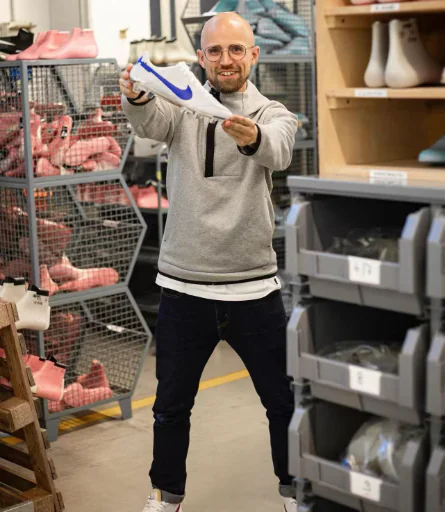
For anyone involved in the global sports footwear trade—from importers to retailers—identifying the core countries driving Nike’s production is critical to strategic decision – making. While Nike once had manufacturing ties to regions like Japan and South Korea, today, three Asian nations stand as the backbone of its output: China, Vietnam, and Indonesia. Together, these countries account for over 85% of Nike’s total shoe production, a statistic that underscores their irreplaceable role in the brand’s global operations.
From an international trade (international trade) perspective, this concentration is no accident. Each country offers unique advantages that align with Nike’s goals of balancing cost efficiency, production scale, and quality control. For instance, Vietnam leads in overall volume due to competitive labor costs, while China excels in high – tech and specialized production runs. Indonesia, meanwhile, serves as a reliable hub for mid – volume, cost – sensitive lines. Understanding which country specializes in what allows importers to anticipate lead times, negotiate better terms with suppliers, and mitigate risks like regional supply chain disruptions. It also directly answers the fundamental question: Where are Nike shoes made? —a query that guides both business partnerships and consumer purchasing decisions worldwide.
3.1 Deep Dive into Top Locations: China, Vietnam, Indonesia
When breaking down Nike’s production hubs, each country’s strengths become clear, especially when viewed through an international trade lens. China, a long – standing partner, boasts a network of Nike shoes factories in China that span provinces like Guangdong, Fujian, and Jiangsu. These facilities are not just large—they’re technologically advanced, capable of producing high – end models like the Air Max and Flyknit lines that require precision manufacturing. China sports shoe suppliers here have decades of experience working with Nike, meaning they understand the brand’s strict quality standards and can adapt quickly to design changes. This expertise has kept China relevant even as labor costs have risen, with many factories now focusing on value – added processes like sustainable material integration.
Vietnam, the current leader in Nike’s production volume, has leveraged its low labor costs and government incentives for foreign manufacturers to attract over 100 Nike contract factories. Unlike some newer hubs, Vietnam’s infrastructure—including ports and transportation networks—is well – developed, making it easy to ship raw materials in and finished shoes out. This efficiency is a major draw for importers looking to minimize logistics costs. Indonesia, on the other hand, is a steady performer, with factories concentrated in Java that specialize in casual and lifestyle sneakers. While it may not match Vietnam’s volume or China’s tech prowess, Indonesia offers stability, with a large, skilled workforce and fewer trade barriers for certain regional markets. Together, these three countries create a diversified production base that keeps Nike’s global supply chain resilient.
3.2 What Roles Do These Countries Play in Nike’s Supply Chain?
Each of Nike’s top production countries plays a distinct, complementary role in its supply chain— a dynamic that’s key for international trade professionals to understand. China acts as the “innovation and quality hub.” Nike supply chain China is integrated with local suppliers that provide specialized components, from high – performance fabrics to custom foam midsoles, allowing Nike to test and scale new technologies quickly. For example, when Nike launched its recycled – material Space Hippie line, Nike shoes factories in China were among the first to adapt their processes to handle the unique recycled yarns, ensuring the line hit markets on schedule. Additionally, China’s proximity to major consumer markets in Asia means shoes made here can reach retailers in weeks, not months— a critical advantage for meeting seasonal demand.
Vietnam, by contrast, is the “volume workhorse.” Its factories focus on mass – producing core models like the Nike Air Force 1, which require high output at competitive costs. Vietnam’s role is vital for keeping Nike’s prices accessible while maintaining profit margins— a balance that keeps the brand competitive in global markets. Indonesia serves as the “flexibility hub,” stepping in to handle production spikes or fill gaps when other regions face disruptions. For example, during a 2022 lockdown in Vietnam, Indonesian factories increased output of casual sneakers to prevent stockouts. This flexibility is supported by China sports shoe suppliers that often partner with Indonesian facilities to share materials and expertise, creating a cross – regional support system.
Beyond their individual roles, these countries work together to mitigate risks. If one region faces tariffs, labor shortages, or natural disasters, Nike can shift production to another— a strategy that protects importers from delays and ensures consistent supply. For anyone in the sports footwear trade, recognizing these roles isn’t just about knowing Nike manufacturing locations; it’s about building smarter, more resilient sourcing strategies that align with Nike’s global operations.
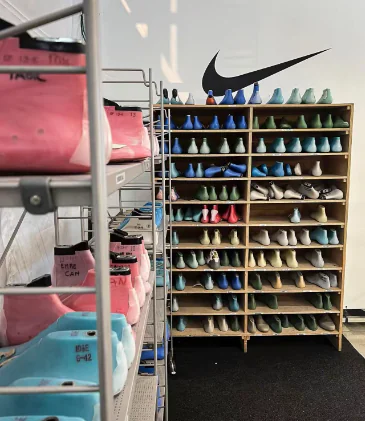
4. Why Does Nike Spread Its Shoe Production Across Asia?
For global brands like Nike, manufacturing location strategy is never random—and its decision to concentrate and diversify production across Asia is a masterclass in international trade (international trade) efficiency. This approach isn’t just about reducing costs; it’s about building a resilient, scalable system that aligns with the brand’s goal of dominating the global sports footwear market. By spreading production across countries like China, Vietnam, and Indonesia, Nike avoids overreliance on a single region, mitigating risks ranging from trade tariffs to natural disasters. It also allows the brand to tap into each country’s unique strengths, whether that’s China’s tech – advanced factories or Vietnam’s cost – competitive labor.
From an international trade perspective, this regional spread is critical for maintaining market agility. In an industry where consumer trends shift overnight—think limited – edition sneaker drops or sudden demand for sustainable designs—having production hubs across Asia lets Nike adjust output quickly. For example, if a new style gains popularity in Europe, factories in Vietnam (with easy access to major shipping lanes) can ramp up production to meet deadlines, while Chinese facilities focus on high – tech iterations of the same design. This strategy also directly addresses the question many stakeholders ask: Where are Nike shoes made? —the answer, rooted in Asia’s diverse capabilities, reveals how Nike balances global demand with localized production efficiency. Most importantly, this spread strengthens Nike supply chain China and its broader Asian network, turning potential vulnerabilities (like regional labor shortages) into opportunities for collaboration across borders.
4.1 Cost-Related Reasons Behind Asia-Focused Production
Cost optimization is the backbone of Nike’s Asia – centric production strategy, and each country in its network offers distinct financial advantages that resonate with international trade professionals. Labor costs, a major expense in footwear manufacturing, vary significantly across Asia—but all remain competitive compared to Western markets. Vietnam, for instance, has a minimum wage for factory workers that’s roughly a third of China’s, making it ideal for mass – producing high – volume, entry – level models like the Nike Revolution. China, while more expensive, offsets higher labor costs with greater efficiency: Nike manufacturing locations in China, such as those in Guangdong, use automated assembly lines that reduce labor hours per shoe, keeping overall costs in check.
Beyond labor, Asia offers cost savings in raw materials and logistics—two pillars of international trade profitability. Countries like Indonesia and Malaysia are major producers of rubber, a key component in shoe soles, so sourcing locally cuts transportation costs for Nike’s factories. China, meanwhile, has a dense network of China sports shoe suppliers that provide everything from synthetic fabrics to shoe laces, eliminating the need for expensive international shipping of components. Tariff advantages further sweeten the deal: many Asian countries have free trade agreements (FTAs) with major consumer markets like the EU and Japan, reducing import duties on finished Nike shoes. For example, shoes made in Vietnam enjoy lower tariffs when exported to the EU than those made in the U.S., a cost saving that Nike passes on to consumers (to boost sales) or retains (to fund innovation). Even Nike shoes made in China benefit from preferential tariffs under certain FTAs, making China a cost – effective choice for specific market segments.
4.2 How Asia’s Industrial Ecosystem Benefits Nike’s Manufacturing
Asia’s mature, interconnected industrial ecosystem is a hidden gem in Nike’s production strategy, offering advantages that go far beyond cost savings—especially for brands focused on scale and innovation. China, in particular, has a “one – stop shop” ecosystem that supports every stage of footwear manufacturing: from raw material sourcing (via local textile mills) to component production (from specialized foam suppliers) to finished goods assembly at Nike shoes factories in China. This integration means a Chinese factory can receive a shipment of recycled polyester fabric in the morning and have it cut, sewn, and assembled into a shoe upper by the afternoon—reducing lead times from months to weeks. For international trade professionals, this speed is a game – changer: it allows importers to place smaller, more frequent orders, minimizing inventory costs and reducing the risk of overstocking outdated styles.
Asia’s ecosystem also fosters specialization, letting Nike leverage each country’s unique industrial strengths. Vietnam has invested heavily in footwear – focused infrastructure, including dedicated ports for shipping shoes and training programs for factory workers skilled in mass production. Indonesia, meanwhile, excels in producing casual sneakers, with a network of small to mid – sized suppliers that specialize in flexible, low – volume runs—perfect for testing new designs before scaling up. Even cross – regional collaboration is seamless: a Nike manufacturing location in Vietnam might source high – tech shoe soles from a Chinese supplier, while a Chinese factory uses Indonesian rubber for its midsoles. This interconnectedness strengthens Nike supply chain China by turning it into a hub that supports the entire Asian network, rather than an isolated production center. For Nike, this ecosystem means consistent quality (suppliers across Asia adhere to global standards) and unmatched scalability—critical for meeting the demand of selling over 1 billion pairs of shoes annually. For importers and retailers, it means reliable access to a diverse range of Nike products, backed by an ecosystem that can adapt to any market change.
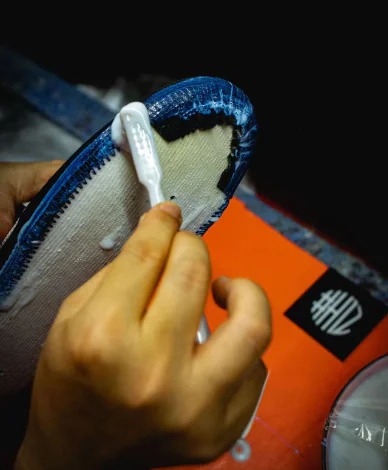
5. What You Need to Know About Nike Manufacturing in China?
For anyone navigating the global sports footwear trade—importers, retailers, or supply chain managers—understanding Nike’s manufacturing presence in China is non – negotiable. China isn’t just a “production spot” for Nike; it’s a strategic pillar that has shaped the brand’s global success for over four decades. In the context of answering Where are Nike shoes made?, China stands out as a consistent, high – performing hub, even as Nike has diversified to other Asian countries. Today, while Vietnam leads in overall volume, China remains irreplaceable for its ability to blend advanced technology, skilled labor, and deep supply chain integration—making it a critical focus for international trade (international trade) professionals seeking reliable, high – quality sourcing partners.
What makes Nike’s China manufacturing unique is its balance of scale and specialization. Unlike some low – cost production hubs, China’s facilities don’t just churn out basic sneakers; they produce Nike’s most innovative lines, from the tech – packed Air Max to the sustainable Space Hippie collection. This versatility means Nike shoes made in China cater to both mass markets and premium segments, a flexibility that keeps Nike competitive globally. Additionally, China’s role in Nike’s network extends beyond production: it’s a testing ground for new manufacturing technologies and a gateway to Asia’s largest consumer market. For importers, this translates to opportunities to access cutting – edge products with shorter lead times, thanks to China’s proximity to key Asian retail destinations. In short, ignoring Nike’s China manufacturing means missing a critical piece of the puzzle when answering Where are Nike shoes made? —and risking gaps in your sourcing strategy.
5.1 Overview of Nike’s Supply Chain in China
Nike’s supply chain in China is a masterclass in integration, designed to streamline every step from raw material sourcing to finished product delivery— a model that China sports shoe suppliers across the country have adapted to and elevated. At its core, this supply chain is built on three pillars: local sourcing, advanced manufacturing facilities, and efficient logistics. Starting with raw materials, Nike partners with Chinese suppliers for everything from recycled polyester fabrics (sourced from mills in Jiangsu) to high – performance foam midsoles (produced in Guangdong), cutting down on international shipping costs and reducing carbon footprints— a key priority for modern international trade operations.
The heart of Nike supply chain China lies in its network of specialized factories. Unlike generic manufacturing hubs, Nike shoes factories in China are often tailored to specific product lines: for example, a facility in Fujian might focus exclusively on running shoes, while one in Zhejiang specializes in basketball sneakers. These factories are equipped with automated assembly lines, 3D knitting machines, and quality control systems that meet Nike’s global standards— ensuring consistency even for high – volume orders. What’s more, the supply chain’s integration means these factories can receive components (like shoe soles or laces) from nearby suppliers in as little as 24 hours, slashing lead times for importers. For instance, a U.S. – based retailer ordering Nike shoes made in China can expect delivery in 4–6 weeks, compared to 8–10 weeks from some other Asian hubs. This efficiency, paired with China’s well – developed ports (like Shanghai and Shenzhen), makes Nike’s China supply chain a top choice for international trade professionals prioritizing speed and reliability.
5.2 How China Became a Core Part of Nike’s Production Plan
China’s journey to becoming a core part of Nike’s production plan is a story of strategic alignment— between Nike’s global goals and China’s evolving industrial landscape. It all began in 1981, when Nike opened its first manufacturing partnership in China. At the time, China was emerging as a global manufacturing hub, offering abundant, skilled labor at a fraction of the cost of Western markets. For Nike, which was then a growing brand competing with Adidas, this was a chance to scale production without sacrificing quality. Early on, Nike manufacturing locations in China focused on basic sneakers, but as China’s industrial capabilities grew— with investments in technology and infrastructure— Nike expanded its operations to include more complex, high – value products.
A turning point came in the 2000s, when China shifted from a “low – cost” to a “high – efficiency” hub. The country’s government invested heavily in manufacturing tech, and China sports shoe suppliers upgraded their facilities to meet global standards. Nike seized this opportunity, partnering with Chinese factories to produce its most innovative designs. For example, when Nike launched Flyknit technology (which uses a single piece of knitted fabric for shoe uppers), Chinese factories were among the first to master the complex production process— solidifying China’s role as a leader in advanced manufacturing. Additionally, China’s rise as a consumer market played a key role: by producing locally, Nike could quickly respond to trends in China’s sneaker market (like the popularity of streetwear – inspired designs), turning its production hubs into “local – for – local” powerhouses. Today, as Nike prioritizes sustainability and digital manufacturing, China remains at the forefront— testing recycled material processes and AI – powered quality control— proving that its status as a core production hub is not just historical, but future – focused. For international trade professionals, this history highlights a key lesson: successful global sourcing relies on partnering with countries that can grow and adapt alongside your brand— and China has done exactly that for Nike.

6. What Are the Key Chinese Hubs Producing Nike Shoes?
For anyone in the global sports footwear trade, identifying China’s key hubs for Nike production is essential to optimizing sourcing strategies. When answering Where are Nike shoes made? within China, it’s not just about “China as a whole”—but specific regions that have built specialized ecosystems to meet Nike’s high standards. These hubs aren’t random; they’ve emerged due to a mix of infrastructure, skilled labor, and proximity to supply chain partners, making them critical nodes in Nike supply chain China.
Each hub caters to different aspects of Nike’s production, from mass-market sneakers to high-tech, premium lines. This specialization means Nike shoes made in China can vary by region, but all maintain consistent quality— a key advantage for importers seeking to diversify their product offerings without compromising on reliability. Understanding these hubs also helps international trade (international trade) professionals anticipate lead times and cost variations, as each region has unique logistics and labor dynamics. In short, these hubs are the backbone of Nike’s manufacturing success in China, and ignoring their distinct roles means missing out on strategic sourcing opportunities.
6.1 Top Cities and Regions for Nike Shoes Factories in China
Three regions stand out as the primary hubs for Nike shoes factories in China, each with a focus that aligns with Nike’s production needs. First, Fujian Province—home to cities like Jinjiang and Xiamen—is the “sneaker capital” of China, hosting over 40% of Nike’s Chinese factories. Jinjiang, in particular, specializes in running and casual shoes, with factories equipped for high-volume production. Its proximity to local textile and rubber suppliers cuts component shipping times, a major plus for international trade efficiency.
Second, Guangdong Province, including Guangzhou and Dongguan, is Nike’s hub for high-tech and premium models. Factories here produce Air Max and Flyknit lines, leveraging advanced automation (like 3D knitting machines) and skilled labor. Guangdong’s well-developed ports (Shenzhen, Guangzhou) also make it easy to export finished shoes globally, reducing logistics costs for importers.
Third, Zhejiang Province, centered in Wenzhou and Ningbo, focuses on basketball and training shoes. Wenzhou’s expertise in durable, performance-focused footwear makes it ideal for Nike’s rugged lines. Like Fujian, Zhejiang benefits from local supply chains, ensuring factories have quick access to specialized materials. Together, these three regions account for over 85% of Nike shoes made in China, making them the go-to spots for anyone sourcing Nike footwear from China.
6.2 Why These Hubs Stand Out Among China Sports Shoe Suppliers
What sets these hubs apart from other China sports shoe suppliers is their deep integration with Nike’s needs—built over decades of collaboration. First, they offer “end-to-end” supply chain support: from raw material sourcing to finished product delivery, every step is localized. For example, Fujian’s Jinjiang has thousands of local suppliers providing everything from shoe soles to laces, so Nike factories don’t need to import components. This integration slashes lead times (often to 2–3 weeks for components) and reduces costs, a huge advantage for international trade operations.
Second, these hubs have invested heavily in Nike-aligned infrastructure. Guangdong’s factories, for instance, have adopted Nike’s sustainability standards (like water-saving dyeing processes) and digital quality control tools, ensuring compliance with global brand requirements. This level of alignment is rare among smaller Chinese suppliers, making these hubs more reliable for long-term partnerships.
Finally, they have a skilled, specialized workforce. Fujian’s workers, for example, have years of experience in mass sneaker production, while Guangdong’s teams excel at operating high-tech machinery. This expertise means fewer production errors and faster ramp-up times for new designs—critical for Nike’s fast-paced product cycles. For importers, this translates to consistent quality, on-time deliveries, and access to the full range of Nike manufacturing locations in China, making these hubs irreplaceable in the global sports footwear supply chain.


Berry Bian, Marketing Director at UnionSource, brings years of experience in global sourcing and brand strategy. Berry focuses on analyzing market trends and sharing insights that help international buyers and business partners stay ahead in the fast-changing world of wholesale trade.