

Look, I get it. You’ve found the perfect product on Alibaba, negotiated a great price, and you’re feeling pretty good about yourself. Then the shipping quote comes in and… ouch. Suddenly that 40% margin you calculated just dropped to 15%.
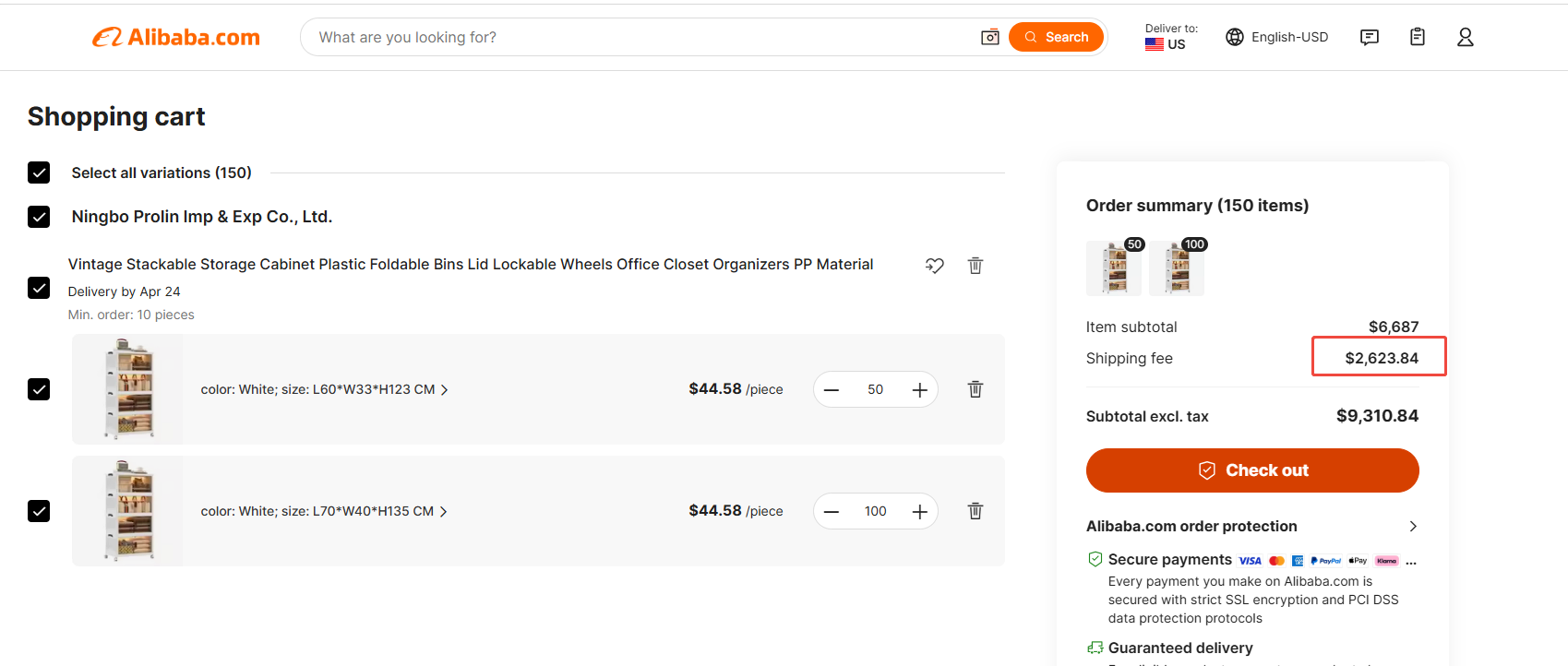
I’ve been helping businesses import from China for over 15 years, and shipping costs are still the number one thing that catches people off guard. Everyone talks about choosing between air and sea freight, but there’s so much more to it than that. Today, I’m going to share the strategies that most articles skip—the ones that actually make a difference to your bottom line.
The Hidden Costs Everyone Misses (And How They’re Bleeding Your Budget)
Before we dive into solutions, let’s talk about what you’re actually paying for. Because here’s the thing: most first-time importers focus on the freight quote and completely miss these hidden expenses:
Dimensional Weight Charges – This is the silent profit killer. Your supplier says your shipment weighs 100kg, so you budget based on that. But then the freight company measures your boxes and calculates based on volume instead of actual weight. I’ve seen cases where dimensional weight was 3x the actual weight. That “small” package suddenly costs $2,000 instead of $700.
Port Congestion Fees – During peak season (August-October for Christmas inventory, Chinese New Year period), ports get backed up. You’ll see extra charges like “port congestion surcharge” or “peak season surcharge” that can add 20-40% to your base rate. Nobody warns you about this until the invoice arrives.
Customs Examination Fees – If customs decides to physically inspect your container, you’re paying for it. This includes moving the container to the examination site, the actual inspection, and moving it back. We’re talking $500-1,500 depending on the port.
Currency Fluctuation – You get quoted in USD but your supplier’s local logistics partner charges in RMB. Between quote and payment, exchange rates shift. On a $10,000 shipment, even a 2% swing means $200 out of pocket.
The “Small Shipment” Penalty – Here’s one nobody talks about: If you’re shipping less than 1 cubic meter or under 100kg by sea (LCL), you often pay disproportionately more per kg than larger shipments. It’s like buying one apple versus a bag—the per-unit cost is way higher.
I learned this the hard way when I started. My first client ordered samples worth $800, and shipping was $650. The math didn’t math.
Strategy #1: Master the Art of Packaging Optimization (Save 15-30% Immediately)
Okay, here’s where most articles give you generic advice like “reduce packaging.” Let me get specific.
I was working with a kitchenware importer last year. They were shipping ceramic bowls from Chaozhou to Los Angeles. Their supplier was packing 24 bowls per carton, each bowl wrapped individually, with tons of foam. The carton size? 60x40x50cm. Seemed reasonable, right?
Wrong. We did the math: each carton was only using about 65% of its internal volume. The dimensional weight calculation was killing them—paying for air, literally.
Here’s what we changed:
Nested Packing – Instead of side-by-side, we stacked bowls inside each other (with protective layers). Got 36 bowls per carton instead of 24.

Custom Carton Sizes – We had the factory switch from standard cartons to custom sizes that matched the nested bowls exactly. Reduced carton size to 50x35x45cm.
Result? Same number of bowls, 40% fewer cartons. Shipping cost dropped from $4,200 to $2,700 per container. That’s $1,500 saved per shipment, four times a year = $6,000 annual savings.
Here’s the kicker: The factory initially resisted because custom cartons cost $0.30 more per box. But when we showed them the total savings ($1,500 vs. spending an extra $120 on cartons), they got on board.
Action items you can implement today:
- Request your supplier to send you the exact internal dimensions of their standard cartons
- Calculate the actual space your product occupies
- If there’s more than 20% empty space, it’s worth discussing optimization
- Ask your freight forwarder or sourcing agent to review packaging before production starts
Pro tip: If your supplier pushes back on packaging changes, this is exactly where having a China sourcing agent with local relationships makes a massive difference. They can visit the factory, physically demonstrate better packing methods, and negotiate the changes face-to-face. It’s not about being demanding—it’s about showing them how everyone wins.
Strategy #2: The Port Selection Strategy That Saved My Client $40,000
Here’s something most articles won’t tell you because it requires local knowledge: Not all Chinese ports are created equal.
Everyone defaults to shipping from Shenzhen or Shanghai because those are the big names. But depending on where your supplier is located, you might be paying $500-2,000 extra in domestic transportation just to get your goods to the “famous” port.
Real example: I had a client sourcing toys from Shantou. Their previous agent was trucking everything 4 hours to Shenzhen port. Domestic transport: $800 per container.
Shantou has its own port. It’s smaller, yes, but guess what? The ocean freight rate was actually $200 cheaper to LA (because the shipping lines wanted to fill those vessels), and domestic transport was just $150. Total savings per container: $850.
They ship 4 containers per month. That’s $40,800 saved per year. Just by using a different port.
The ports most people overlook:
- Ningbo – Excellent for Zhejiang province suppliers, often cheaper than Shanghai
- Xiamen – Great for Fujian province, competitive rates to US West Coast
- Qingdao – Northern China, underutilized for Europe-bound shipments
- Shantou – Perfect for Chaoshan region manufacturers (huge for toys, ceramics, apparel)
For more information about Chinese ports, please refer to our “Top 10 Ports in China” guide.

The catch? You need someone on the ground who knows which ports work with which shipping lines, what the schedule reliability is like, and whether customs clearance at that port is smooth. This is insider knowledge you can’t get from a website.
When you work with an experienced sourcing agent in China, they’ve already navigated these waters (pun intended) hundreds of times. They know that Port A has faster customs clearance but Port B has better rates to Europe. They know which ports get backed up during Chinese New Year and which ones keep moving.
Strategy #3: Consolidation—But Not How You Think
Everyone knows about consolidation: combining multiple orders into one shipment. But here’s the advanced play nobody teaches you.
Horizontal Consolidation (what everyone does): Buy from 3 different suppliers, consolidate at a warehouse, ship together. Yes, this saves money versus 3 separate shipments.
Vertical Consolidation (the smarter play): Coordinate your purchasing cycle across ALL your products so they’re ready to ship at the same time, even if they’re different product categories.
I worked with an Amazon FBA seller who was ordering:
- Kitchenware from Guangzhou
- Home decor items from Yiwu
- Drinkware from Jinhua
Previously, they ordered whenever inventory got low. Three separate shipments per quarter, all LCL (less than container load), paying premium rates.
New strategy: We synced production timing across all three categories. Adjusted order quantities to fill a full 40-foot container. Consolidated everything at our warehouse in Ningbo.
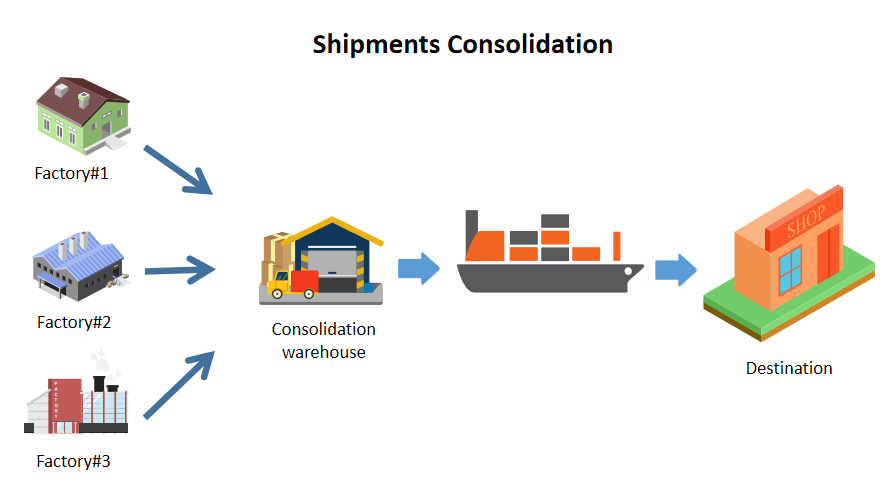
Previous cost: 3 LCL shipments × $2,800 = $8,400/quarter New cost: 1 FCL shipment = $4,200/quarter Savings: $16,800/year
But here’s the real magic: With predictable consolidation timing, we negotiated a yearly shipping contract with the carrier, getting another 8% discount. Total annual savings: over $18,000.
The challenge? Coordinating production timelines across multiple factories requires serious logistics chops. You’re dealing with different lead times, different production capabilities, different communication styles.
This is where having a dedicated sourcing team managing your entire supply chain becomes not just helpful, but genuinely more cost-effective than doing it yourself. Yes, they charge a service fee. But when they’re saving you $18,000 per year on shipping alone, plus preventing quality issues, managing production schedules, and handling the endless back-and-forth with factories… the math works out really well.
Strategy #4: Timing Your Shipments (The $3,000 Difference)
Let’s talk about something I wish someone had told me on day one: when you ship matters almost as much as how you ship.
Peak Season Pricing Reality Check:
I pulled actual quotes for a standard 20-foot container from Ningbo to Los Angeles:
- Mid-February (right after Chinese New Year): $1,800
- April (normal season): $2,400
- September (pre-Christmas rush): $4,200
- October (peak madness): $5,800
Same route. Same container. Same service. $4,000 difference between best and worst timing.
Now, I know what you’re thinking: “But I NEED my inventory for Christmas!” Absolutely. Here’s the strategy:
The 90-Day Forward Planning Method:
Instead of ordering when you’re low on stock (reactive), plan your entire year’s shipments in January (proactive):
- Map out your peak sales periods
- Work backward 90 days for production + shipping
- Frontload your orders into low-season months
- Use the savings to rent warehouse space if needed
Real numbers from a client selling seasonal home decorations:
Old way (reactive ordering):
- August shipment for Christmas: $5,200
- February shipment for Easter: $2,100
- Total: $7,300
New way (forward planning):
- June shipment for Christmas: $2,600
- January shipment for Easter: $1,900
- Added warehouse rent (3 months): $800
- Total: $5,300
Net savings: $2,000 – Plus, they had better stock availability and fewer “sold out” situations during peak sales.
The Chinese New Year Sweet Spot:

Here’s an insider tip: The two weeks immediately AFTER Chinese New Year (usually late February) are the absolute best time to ship. Why?
- Factories are fully staffed and catching up on orders
- Shipping lines are desperate for cargo (everyone stopped shipping during CNY)
- Rates drop 30-40% from peak season
- Port congestion is minimal
If you can structure your business to take advantage of this window for at least one major shipment per year, you’ll see significant savings.
But (and this is important): You need to have your orders placed and confirmed BEFORE CNY hits, so products are ready to ship the moment factories reopen. Miss this window and you’re stuck in the March surge when everyone else is shipping too.
Managing these timelines across multiple suppliers and product categories? Nearly impossible solo. This is where experienced sourcing agents earn their keep—they track factory holiday schedules, coordinate production timing, book shipping space in advance, and make sure you hit these optimal windows.
Strategy #5: The Incoterms Game-Changer Nobody Explains Properly
Okay, bear with me because this might sound dry, but understanding Incoterms can literally save you thousands of dollars per shipment.
Most suppliers quote you EXW (Ex-Works) or FOB (Free on Board). Sounds official and professional. But here’s what’s actually happening:
EXW: You handle and pay for everything from the factory door to your warehouse. Supplier has zero logistics responsibility.
FOB: Supplier delivers to the port and handles export customs. You handle ocean freight, import customs, and domestic delivery.
Most articles tell you “FOB is better than EXW.” True, but incomplete advice. Here’s the real strategy:
For small orders (under $5,000): DDP (Delivered Duty Paid) is often cheaper overall, even though it looks expensive upfront. Why? Your supplier has existing relationships with freight forwarders who give them volume discounts you can’t get. Plus, you avoid the coordination headaches.
For medium orders ($5,000-$30,000): FOB, but with YOUR freight forwarder, not theirs. You get competitive rates and maintain control.
For large orders (over $30,000 or full containers): FOB with your contracted carrier, negotiated annual rates.
Here’s where it gets interesting…
I had a client who was paying their supplier to arrange “door-to-door” shipping. Convenient, right? The supplier quoted $3,200 for a container to New Jersey.
We got quotes from three freight forwarders: $2,100, $2,250, and $2,400.
The supplier was marking up freight by 45%.
Even better: Because we were using a freight forwarder who specialized in that route, the transit time dropped from 35 days to 28 days, and we got included cargo insurance at no extra charge.
The lesson: Logistics is not your supplier’s specialty. Their profit comes from manufacturing, so they often outsource shipping to whoever is convenient, then add markup. Separate these two relationships.
When working with a sourcing agent changes the game:
A good China sourcing agent maintains relationships with multiple freight forwarders and carriers. They’re not loyal to one company—they’re loyal to getting you the best deal. For every shipment, they can quickly compare options and negotiate based on:
- Current market rates
- Specific route conditions
- Volume commitments across all their clients
- Relationship credits with carriers
We recently saved a client 22% on ocean freight not because we found a magical cheap carrier, but because we were shipping three clients’ containers the same week, giving us negotiating leverage. That’s the power of consolidated buying power.
Strategy #6: The Warehouse Strategy That’s Actually Genius
Here’s a strategy that most small importers never consider: keeping inventory in China longer and shipping more frequently in smaller batches.
“Wait, what? Doesn’t that increase costs?”
Counterintuitive, I know. But hear me out.
Traditional approach:
- Order 6 months of inventory
- Ship one massive container
- Pay $4,500 for shipping
- Store everything in expensive US warehouse space ($1,200/month)
- Risk: Products sitting for months, tying up cash, items go out of style
New approach:
- Order 6 months of production
- Store in China warehouse ($200/month)
- Ship 2 containers over 3 months ($2,800 × 2 = $5,600)
- Only pay for US storage for fast-moving items ($400/month)
Cost comparison over 6 months:
- Traditional: $4,500 + ($1,200 × 6) = $11,700
- New method: $5,600 + ($200 × 6) + ($400 × 6) = $9,200
Savings: $2,500 – Plus dramatically improved cash flow and flexibility.
The real win? If a product isn’t selling well, you can pivot before shipping the second container. If something’s a hit, you can reorder and ship faster than ordering fresh from the factory.
The catch: This only works if you have reliable warehouse operations in China. You need:
- Real-time inventory management
- Fast shipping turnaround when you place orders
- Quality control before each shipment (can’t ship damaged goods)
- Ability to reconfigure/repackage based on your needs
We offer this as part of our sourcing services, and honestly, it’s become one of the most valuable parts of what we do. Clients can essentially use China as their “back-room warehouse” with inventory ready to ship within days, not weeks.
Strategy #7: The Quality Control Connection You’re Missing
“Wait, quality control? This is about shipping costs!”
Stay with me. Poor quality control is a hidden shipping cost multiplier, and almost nobody talks about it this way.
Here’s what happens when you skip proper QC:
Scenario: You order 2,000 units. Your supplier says everything’s perfect. You ship. Upon arrival, you discover:
- 15% have cosmetic defects (can’t sell)
- 5% are completely unusable
The shipping cost disaster:
- You paid to ship 400 defective units ($600+ in wasted freight)
- You need replacements, so you air freight 400 units ($2,200)
- Or you place another order and pay shipping again
- You’re paying twice to get the inventory you should have received the first time
I watched this exact scenario play out with a client importing drinkware. Shipping cost: $3,200. Defect rate: 18%. Effective shipping cost per GOOD unit: 35% higher than expected.
After implementing strict pre-shipment inspection:
- Defect rate dropped to 2%
- No emergency air freight needed
- Effective shipping cost per good unit: exactly as budgeted
The ROI calculation:
- Pre-shipment inspection cost: $300
- Savings from not shipping defects: $600
- Savings from avoiding emergency air freight: $2,200
- Total benefit: $2,500 per shipment
This is where having boots on the ground in China becomes incredibly valuable. We’re not just checking boxes on a form—we’re actually at the factory, opening cartons, testing products, checking packaging quality, and ensuring everything is optimized for shipping.
When we catch packaging issues before shipping, we can:
- Reject improperly packaged goods (avoiding damage in transit)
- Suggest better packaging methods (reducing dimensional weight)
- Verify carton counts (making sure you’re not paying for empty space)
- Coordinate last-minute consolidation opportunities
That inspection fee you’re paying? It’s saving you multiples in shipping costs.
The Freight Forwarder Selection Framework (Choose Wisely)
Look, I need to be honest with you. Not all freight forwarders are created equal. And choosing the wrong one can cost you in ways that don’t show up on the quote sheet.
I’ve worked with probably 50+ different freight forwarders over the years. Here’s what separates the good from the mediocre:
Red Flags:
- They can only ship from one or two ports (limited options = limited savings)
- They won’t provide a detailed cost breakdown (hiding markup)
- Communication is slow (48+ hour response times)
- They can’t handle customs documentation properly (your shipment gets delayed)
- No cargo insurance options
- They don’t proactively warn you about peak season surcharges
Green Flags:
- They ask detailed questions about your products before quoting
- They suggest optimization opportunities you haven’t thought of
- They provide weekly or monthly rate updates
- They handle all documentation themselves
- They offer flexibility (different shipping methods, different carriers)
- They have direct relationships with carriers (not just broker relationships)
The conversation that reveals everything:
Ask them: “I’m shipping kitchenware from Guangzhou to Houston. What’s your quote?”
If they immediately give you a number, be skeptical.
If they ask: “What’s the weight? What are the dimensions? How is it packaged? When do you need it to arrive? Are there any special handling requirements?” – that’s someone who knows what they’re doing.
How sourcing agents provide compounding value here:
Here’s the thing: When you’re working with a professional sourcing agent, they’re already managing relationships with multiple vetted freight forwarders. They’re not starting from scratch for each client.
Over 17 years, we’ve built relationships with forwarders who specialize in different routes, different product types, different shipment sizes. When you come to us with a shipment, we’re not making cold calls to random freight companies—we’re leveraging existing partnerships where we have:
- Pre-negotiated volume discounts
- Priority booking during peak seasons
- Direct communication channels for problem-solving
- Proven track records on specific routes
Is there a service fee for this? Yes. Does it pay for itself in shipping savings alone? Usually within the first 2-3 shipments. Plus you get all the other value (quality control, factory negotiations, production management, etc.).
The Multi-Supplier Coordination That Saves Money (And Sanity)
Let me paint you a picture of the chaos most importers deal with:
You’re sourcing kitchenware from Ningbo, toys from Shantou, and home decor from Yiwu. That’s three different factories in three different cities.
Scenario 1: You coordinate everything yourself
- Email Factory A about production schedule (wait 24 hours for response)
- Email Factory B about production schedule (wait 24 hours for response)
- Email Factory C about production schedule (wait 24 hours for response)
- Try to align timing (Factory A can ship Feb 10, Factory B can ship Feb 20, Factory C can ship Feb 5)
- Arrange trucking to consolidation warehouse (three separate pickups = $$$)
- Wait for everything to arrive at warehouse
- Hope nothing gets delayed
- Coordinate with freight forwarder
- Cross your fingers
Time investment: 15-20 hours of coordination Stress level: High Things that can go wrong: Many
Scenario 2: You have someone on the ground coordinating
- Give your agent the timeline
- They visit all three factories in one week
- They align production schedules in person
- They arrange coordinated trucking (one trip hitting all three = saves 40%)
- They do pre-shipment QC at each factory
- They supervise consolidation
- They arrange freight
- They send you photos and updates
Your time investment: 2 hours of briefing + periodic updates Stress level: Low
Things that can go wrong: Far fewer, and handled before you even know about them
The cost-benefit math:
Let’s say the agent charges 5% commission on your $30,000 order = $1,500.
What do you get for that $1,500?
- Coordinated trucking savings: $400
- Better freight rates (volume negotiation): $600
- Avoiding defects through QC: $800
- Time savings (20 hours × your hourly rate)
- Stress reduction (priceless)
This is why smart importers view a good sourcing agent not as an expense, but as infrastructure. You’re not just paying for coordination—you’re buying operational efficiency, risk mitigation, and expertise that compounds over time.
The Payment Terms Strategy That Improves Cash Flow AND Reduces Costs
Here’s something that doesn’t directly relate to shipping costs, but it creates the financial flexibility that allows you to optimize shipping:
Most suppliers want 30% deposit, 70% before shipping.
What if you could negotiate 30% deposit, 40% before shipping, 30% after delivery?
Or even 30% deposit, 70% after delivery (LC – Letter of Credit)?
“But suppliers won’t agree to that!”
Actually, many will. But you need leverage. And here’s where the compounding benefits of working with an established sourcing company come into play.
When you’re a one-time buyer, you have no leverage. When your sourcing agent has a 15+ year relationship with the factory and brings them consistent orders? Suddenly payment terms become negotiable.
Better payment terms = more cash on hand = ability to order larger quantities when shipping rates are low = savings that multiply.
We negotiated extended payment terms for a client last year. This allowed them to order a full container during the February low-rate window instead of waiting until they had full payment ready in April (when rates were 30% higher). The payment terms negotiation saved them $1,200 in shipping costs alone.
The Hidden Benefit: Prevention
Here’s the final thing I want to talk about, and it’s the one that’s hardest to quantify but might be the most valuable:
Preventing expensive problems before they happen.
A few months ago, a potential client came to us after a disaster. They’d ordered a container of ceramic products. The factory packaged them poorly. 30% arrived broken. They had to:
- Dispute with the supplier (2 months of stress)
- Air freight replacements ($6,000)
- Discount the damaged items ($3,000 revenue loss)
- Deal with angry customers (reputation damage)
Total cost of that “cheap” shipment: Over $15,000 in losses and headaches.
If they’d had someone doing pre-shipment inspection and packaging verification, this would have cost $300 to prevent.
This is the value that doesn’t show up on a spreadsheet until it saves you from disaster.
An experienced sourcing partner catches:
- Packaging that will result in damage
- Carton sizes that will cause dimensional weight charges
- Mislabeling that will cause customs delays
- Production timing issues that will force expensive air freight
- Quality problems that would require replacement shipments
All of these are shipping cost multipliers that happen when you’re trying to manage everything yourself from 8,000 miles away.
Let’s Talk Real Numbers: The Total Cost of Ownership
I want to end with a real client case study, numbers and all, because I think it illustrates everything we’ve talked about.
Client: Mid-size Amazon FBA seller, $500K/year revenue
Products: Mixed category (kitchenware, home goods, drinkware)
Year 1 (DIY Approach):
- Found suppliers on Alibaba
- Managed everything themselves
- Product costs: $180,000
- Shipping costs: $42,000 (8 shipments, mix of LCL and small FCL)
- Defect/replacement costs: $8,000
- Time spent: ~600 hours
- Emergency air freight (twice): $4,500
- Total landed cost: $234,500
Year 2 (Sourcing Agent Partnership):
- Same volume of orders
- Product costs: $171,000 (better factory pricing through agent relationships)
- Service fee: $8,500 (5% on reduced costs)
- Shipping costs: $28,000 (optimized consolidation, better rates, better timing)
- Defect/replacement costs: $1,200 (thorough pre-shipment QC)
- Time spent: ~100 hours
- Emergency air freight: $0
- Total landed cost: $208,700
Net savings: $25,800 Time saved: 500 hours
More importantly: Zero headaches, zero emergency situations, zero 3am panic emails to suppliers.
The service fee was $8,500. The total savings were $25,800. ROI: 304%.
And this is with a mature business. For startups making common mistakes, the savings are often even more dramatic.
The Bottom Line (Because You’re Busy)
Here’s everything distilled:
Immediate actions you can take today:
- Audit your packaging efficiency (email suppliers for internal carton dimensions)
- Review your port options (check if alternative ports are closer to suppliers)
- Map out your annual ordering calendar (plan shipments for low-rate periods)
- Get quotes from 3 different freight forwarders (not just one)
- Implement pre-shipment inspection (even basic checks save money)
Medium-term optimizations:
- Negotiate payment terms that give you flexibility
- Establish a China warehouse relationship for better inventory control
- Build relationships with vetted freight forwarders
- Optimize packaging with suppliers
- Consolidate orders strategically
Long-term strategic decisions:
- Decide if you want to manage the entire supply chain yourself, or partner with experts
- Build redundancy in your supplier network
- Establish systems for consistent quality control
- Create predictable shipping schedules that maximize savings
- Develop relationships that give you leverage (via direct partnerships or through a sourcing agent)
The “Should I Use a Sourcing Agent?” Question
Look, I’m obviously biased since we are a sourcing company. But let me be straight with you about when it makes sense and when it doesn’t.
Don’t use a sourcing agent if:
- You’re ordering very simple products in very small quantities (under $5,000)
- You have time to learn and manage everything yourself
- You plan to visit China regularly
- You only work with 1-2 suppliers
- Your margins are extremely tight (though we often improve margins overall)
Definitely consider a sourcing agent if:
- You’re managing multiple suppliers
- You’re scaling and time is your constraint
- You value consistency and want to prevent disasters
- You want to optimize costs across the entire supply chain, not just one piece
- You’re placing orders over $10,000 per shipment
The partnership model we recommend:
Don’t think of it as “hiring someone to find suppliers.” Think of it as:
- Building a local operations team without the overhead
- Gaining negotiating leverage through collective buying power
- Preventing expensive mistakes before they happen
- Optimizing every touchpoint in the supply chain
- Having experts handle the complex stuff while you focus on growing your business
At Union Source, we work with over 15,000 verified factories across 16 major product categories. Our team has offices in Ningbo, Yiwu, Guangzhou, and Shantou—meaning we can visit your factories in person, not just coordinate via email.
We handle everything from factory verification and price negotiation to production monitoring, quality control, packaging optimization, consolidation, and freight coordination. Yes, there’s a service fee. But that fee typically pays for itself in shipping savings alone, before considering all the other benefits.
Your Next Steps
If you’re serious about reducing your shipping costs (and overall China sourcing costs), here’s what I recommend:
Start simple: Pick one shipment coming up and apply the packaging optimization strategy. Just that one change can save 15-30%.
Think bigger: Map out your next 6 months of orders and see where you can consolidate or optimize timing.
Get smart: If you’re spending over $50K/year on China sourcing, it’s worth talking to professionals who do this all day, every day.
Want to discuss your specific situation? We offer free sourcing consultations where we can review your current costs and identify optimization opportunities. Contact us here – no pressure, just real advice based on 17+ years in the industry.
Remember: Every dollar you save on shipping is a dollar that goes straight to your bottom line. And in today’s competitive e-commerce environment, margins matter more than ever.
About Union Source: We’re a China-based sourcing company with 17+ years of experience helping global businesses source products from China. We specialize in kitchenware, toys, home decoration, drinkware, and 12 other major categories. Our team has offices strategically located near China’s major manufacturing hubs, giving you on-the-ground support where it matters most.

Dujuan is a sourcing specialist at UnionSource China, experienced in global procurement, product development and supplier coordination. She focuses on helping overseas buyers find quality products with reliable service, clear communication and efficient order follow-ups.