

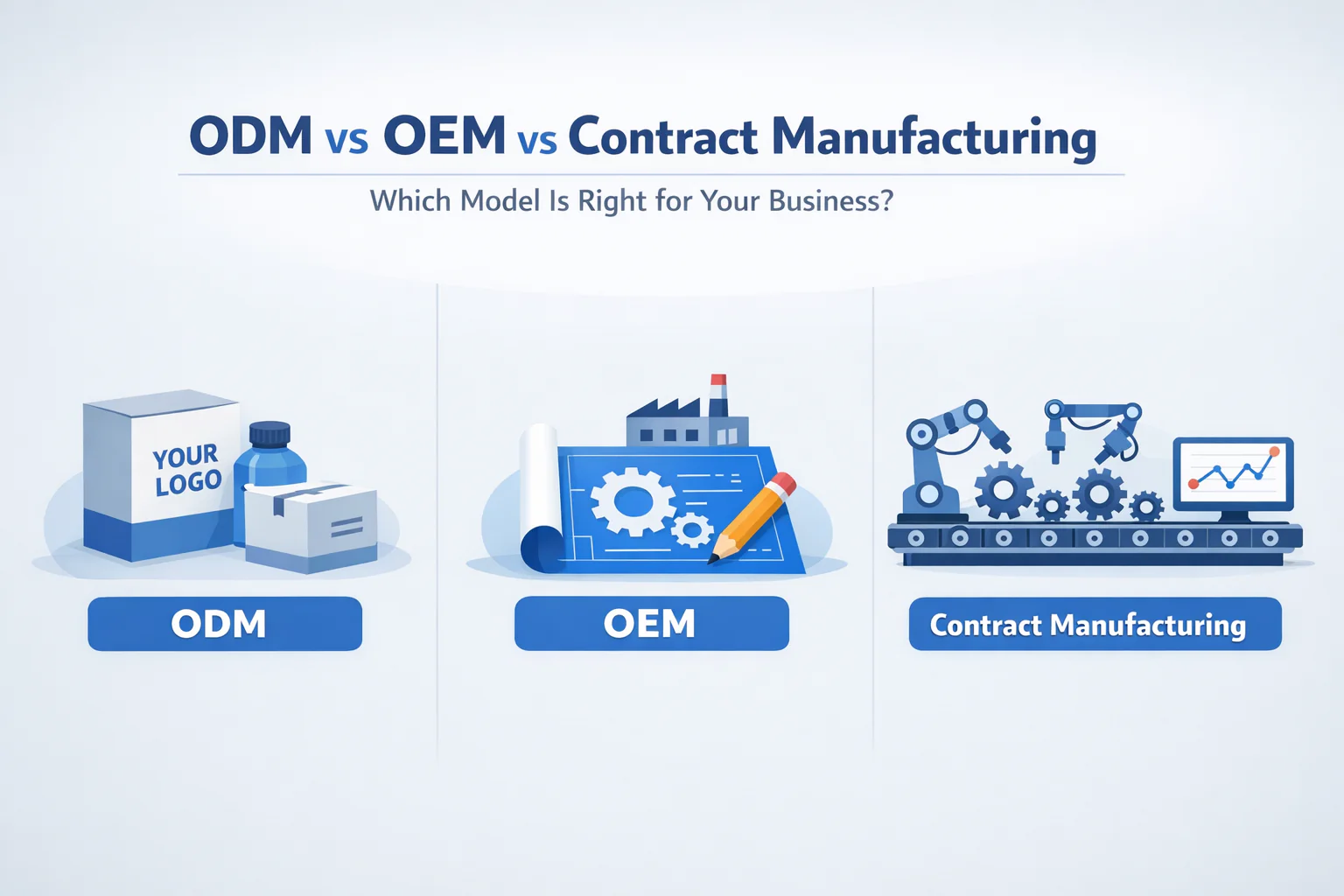
When you’re ready to bring your product idea to life, choosing the right manufacturing partner is one of the most important decisions you’ll make. Three terms you’ll hear constantly are ODM, OEM, and Contract Manufacturing (CM). Understanding these models can save you thousands of dollars and months of frustration.
This guide breaks down everything you need to know about each manufacturing approach, including practical advice that other articles often miss.
What Are ODM, OEM, and Contract Manufacturing?
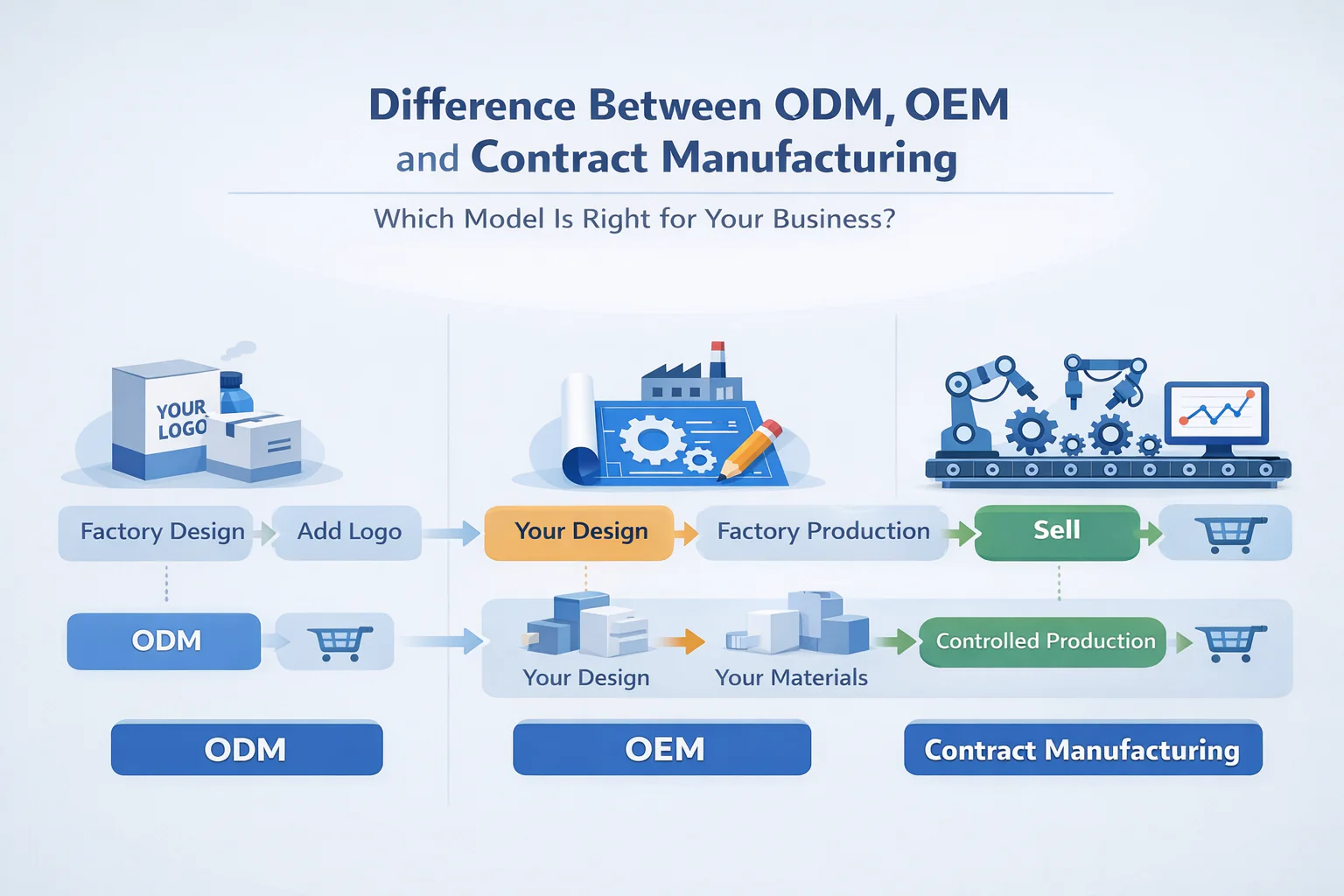
Let’s start with clear definitions of each model.
ODM (Original Design Manufacturing)
ODM means the manufacturer already has a product design ready to go. You select from their existing catalog and add your branding. Think of it like buying a house that’s already built – you can paint the walls and change the furniture, but the structure is already there.
Key features:
- Factory owns the product design
- You make minor changes (colors, logos, packaging)
- Lower upfront costs
- Faster time to market
- Lower minimum order quantities (typically 500-1,000 pieces)
Real example: A water bottle company picks an existing design from a manufacturer’s catalog, adds their logo, and changes the cap color to match their brand.
OEM (Original Equipment Manufacturing)
With OEM, you provide the product design, and the manufacturer produces it using their equipment and expertise. It’s like hiring an architect to build a custom house based on your blueprints.
Key features:
- You own the design and specifications
- Factory uses their production capabilities
- More customization than ODM
- Higher costs and longer timelines
- Medium minimum order quantities (typically 2,000-5,000 pieces)
Real example: An electronics company designs a unique phone case with special features, then works with a manufacturer to produce it.
Contract Manufacturing (CM)
Contract Manufacturing means you control everything – design, materials, production processes, and quality standards. The manufacturer simply provides the labor and facility. This is like being your own general contractor with complete control over every detail.
Key features:
- You own 100% of the intellectual property
- Complete control over production
- Highest customization level
- Highest costs and complexity
- Higher minimum order quantities (typically 10,000+ pieces)
Real example: Apple designs every detail of the iPhone, and Foxconn manufactures it exactly to Apple’s specifications.
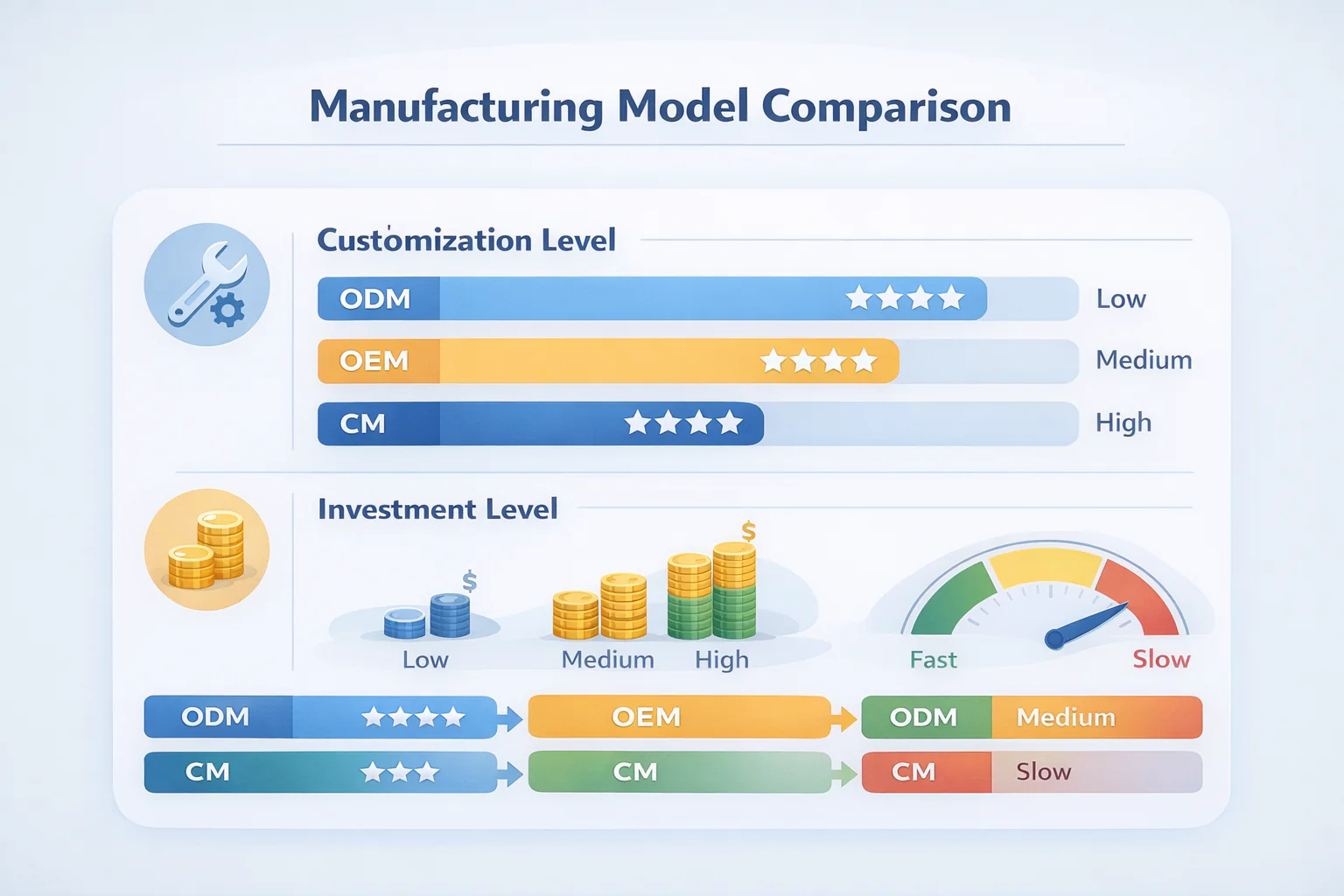
Quick Comparison Table
| Factor | ODM | OEM | Contract Manufacturing |
|---|---|---|---|
| Design Ownership | Factory | Shared | You |
| Customization | Low | Medium | High |
| Initial Investment | Low ($5,000-$15,000) | Medium ($15,000-$50,000) | High ($50,000+) |
| Time to Market | 2-4 months | 4-8 months | 8-12+ months |
| MOQ | 500-1,000 units | 2,000-5,000 units | 10,000+ units |
| IP Protection | Low | Medium | High |
| Best For | Market testing, new businesses | Growing brands | Established companies |
Which Manufacturing Model Should You Choose?
Your choice depends on several factors:
Choose ODM if you:
- Want to test a product idea quickly
- Have a limited budget (under $15,000)
- Don’t need unique product features
- Are new to manufacturing
- Want to launch within 2-3 months
- Are okay with competitors having similar products
Choose OEM if you:
- Have a unique product design
- Want more control over features and quality
- Have a moderate budget ($15,000-$50,000)
- Need your product to stand out
- Can wait 4-6 months for production
- Want to protect some intellectual property
Choose Contract Manufacturing if you:
- Have complex or highly specialized products
- Need complete quality control
- Have significant capital to invest
- Require full IP protection
- Can commit to large production volumes
- Have technical expertise on your team
The Hidden Costs Nobody Talks About
Most articles focus on production costs, but here are the expenses that catch businesses off guard:
ODM Hidden Costs
- Limited differentiation: Your competitors can buy the same product, forcing you to compete mainly on price
- Quality compromises: The factory controls materials and processes, which may not match your standards
- Switching costs: If you want to change suppliers later, you’ll need to redesign from scratch
OEM Hidden Costs
- Tooling fees: Custom molds can cost $5,000-$50,000
- Development time: Multiple sampling rounds can add 2-3 months
- Communication challenges: Translating your design vision requires extensive back-and-forth
CM Hidden Costs
- Quality control: You’ll need to hire inspectors or third-party QC services ($1,500-$5,000 per inspection)
- Inventory management: Larger orders mean more capital tied up in stock
- Legal fees: Proper contracts and IP protection can cost $3,000-$10,000
Quality Control: The Critical Steps Everyone Should Follow
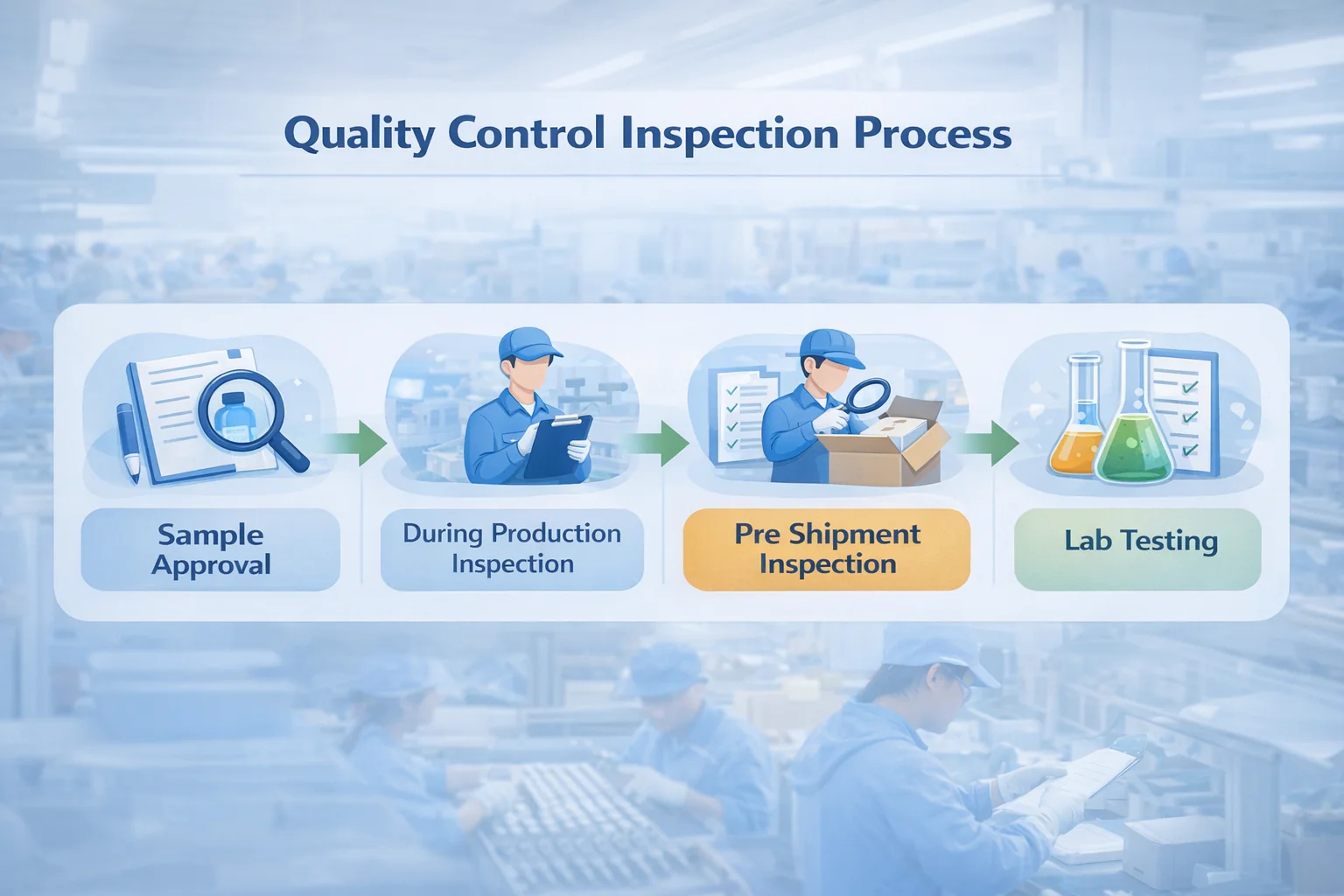
Here’s what most articles miss: quality control strategies vary significantly by manufacturing model, and implementing the wrong approach wastes money.
For ODM Products
Pre-Selection Phase:
- Request samples from at least 3 suppliers
- Test samples yourself – use the product as a customer would
- Check online reviews from other buyers who used the same product
- Ask for certifications (ISO 9001, product-specific certifications)
Production Phase:
- Request pre-production samples before bulk manufacturing
- Hire a third-party inspector for random inspection (inspect 10-15% of products mid-production)
- Conduct a pre-shipment inspection (PSI) on 100% visual check + detailed inspection on 2.5-10% of units
Cost: Budget $800-$2,000 for basic QC on a typical ODM order.
For OEM Products
Development Phase:
- Create detailed specifications document (include measurements, materials, tolerances)
- Review and approve material selection before production
- Conduct First Article Inspection (FAI) – thoroughly test the very first product
Production Phase:
- During Production Inspection (DUPRO) – inspect when 20-30% complete
- Pre-shipment Inspection – detailed check before shipping
- Laboratory testing for safety/compliance if needed
Cost: Budget $2,500-$6,000 for comprehensive QC on an OEM project.
For Contract Manufacturing
Setup Phase:
- Conduct factory audit before partnership
- Validate supplier’s quality management system
- Establish quality checkpoints at each production stage
Ongoing Phase:
- Station resident QC inspector at factory (for large volumes)
- Implement Statistical Process Control (SPC)
- Weekly production reports with defect tracking
- Quarterly supplier performance reviews
Cost: Budget $10,000-$30,000+ annually for professional QC management.
Pro Tip: Companies like SGS and Bureau Veritas provide independent inspection services worldwide. Budget 1-2% of your order value for quality control.
How to Scale Your Manufacturing as Your Business Grows
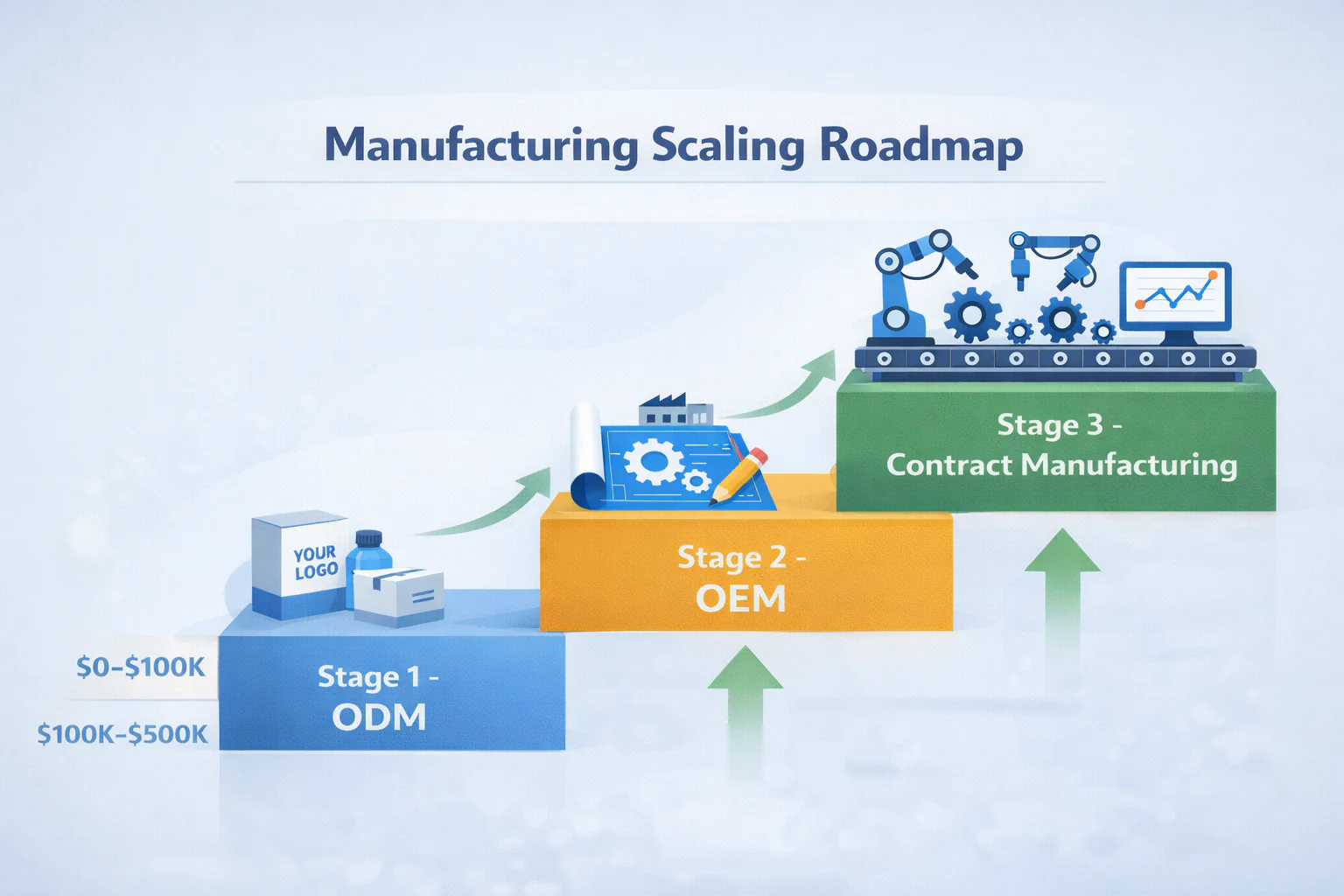
Here’s a strategic roadmap most businesses follow:
Stage 1: Market Validation (ODM)
- Revenue: $0-$100,000
- Strategy: Use ODM to test product-market fit
- Focus: Learn customer preferences, test pricing, build initial customer base
Stage 2: Brand Differentiation (OEM)
- Revenue: $100,000-$500,000
- Strategy: Transition to OEM for unique features
- Focus: Develop proprietary features, build brand identity, improve margins
Stage 3: Scale and Control (Contract Manufacturing)
- Revenue: $500,000+
- Strategy: Move to CM for complete control
- Focus: Optimize costs, ensure consistency, protect IP fully
Making the Transition
From ODM to OEM:
- Identify the top 3 features customers request that current ODM products lack
- Design custom modifications addressing those features
- Find an OEM partner who already makes similar products
- Start with a small custom run (2,000-3,000 units) while maintaining ODM backup
- Gradually shift volume as OEM product proves successful
From OEM to CM:
- Reach consistent monthly volume of 10,000+ units
- Document all specifications and processes completely
- Interview 3-5 CM partners with relevant industry experience
- Run pilot production of 5,000-10,000 units
- Transition gradually over 6-12 months
Risk Management: Protecting Your Business
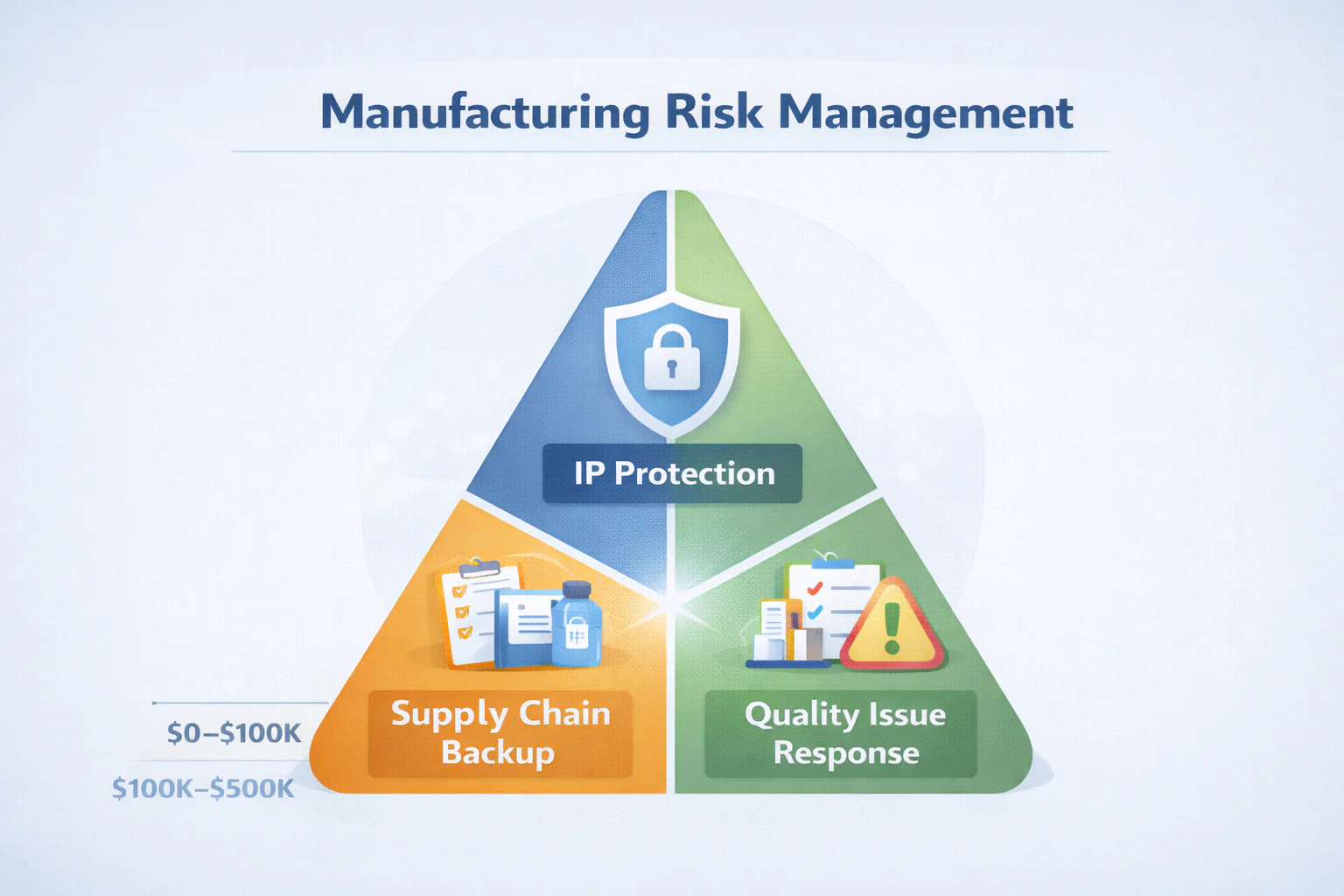
Every manufacturing relationship carries risks. Here’s how to protect yourself:
Intellectual Property Protection
For ODM:
- Register your trademark in manufacturing country (especially China)
- Use unique packaging and branding elements
- Monitor marketplaces for unauthorized sellers
- Include non-compete clauses for your specific market
For OEM:
- File for design patents or utility patents before sharing designs
- Use Non-Disclosure, Non-Use, Non-Circumvention (NNN) agreements
- Register IP in China even if you’re not selling there (manufacturers are there)
- Work only with manufacturers who sign IP protection agreements
For CM:
- Full patent protection before production
- Detailed ownership clauses in contracts
- Regular IP audits
- Segment production across multiple suppliers for critical components
Resource: The U.S. Patent and Trademark Office and World Intellectual Property Organization provide guidance on international IP protection.
Supply Chain Disruption Planning
Every business should have:
- Backup Supplier: Qualify at least one alternative manufacturer (even if you don’t use them)
- Safety Stock: Maintain 60-90 days of inventory for fast-moving products
- Dual Sourcing: For critical products over $500K annually, split orders between two suppliers (70/30 split)
- Diversified Geography: Don’t put all manufacturing in one country or region
Crisis Response Plan:
- Identify critical products that need priority (based on profit and customer impact)
- Create emergency communication channels with suppliers
- Pre-negotiate rush production terms (understand costs)
- Have freight forwarding alternatives ready
Quality Issues Response
When defects occur (and they will):
Immediate Actions:
- Stop sales/shipment of affected batch
- Document the defect with photos and detailed descriptions
- Notify manufacturer within 24 hours
- Quarantine remaining inventory
Resolution Steps:
- Determine defect severity (safety issue vs cosmetic)
- Request root cause analysis from manufacturer
- Negotiate remedy (refund, rework, discount, or replacement)
- Implement corrective actions before next production
Prevention for Future:
- Update quality specifications to address gap
- Add specific checkpoints for this defect type
- Increase inspection frequency for next 3 production runs
- Consider changing suppliers if pattern continues
Working with Chinese Manufacturers: Practical Tips
Since China remains the world’s largest manufacturing hub, here are specific strategies:
Communication Best Practices
- Use Simple English: Avoid idioms, slang, or complex sentence structures
- Provide Visual References: Photos, drawings, and samples work better than long descriptions
- Confirm Understanding: Ask supplier to explain back what they understood
- Document Everything: Follow up verbal discussions with written confirmation
- Time Zone Management: Establish regular call times that work for both parties
Building Strong Relationships
- Visit the Factory: If possible, visit in person at least once before major commitment
- Be Respectful: Understand cultural differences in communication style
- Start Small: Test with smaller orders before large commitments
- Pay on Time: Build trust through reliable payment
- Think Long-Term: Manufacturers prefer stable, long-term partnerships
Negotiation Strategies
- Get Multiple Quotes: Compare at least 3-5 suppliers
- Understand Cost Structure: Ask for breakdown of materials, labor, overhead
- Volume Commitments: Negotiate better pricing for higher volumes or longer-term contracts
- Payment Terms: Standard is 30% deposit, 70% before shipment – negotiate based on relationship
- Quality Terms: Include clear acceptance criteria in contracts
Common Mistakes to Avoid
Mistake #1: Choosing Only Based on Price
Why it’s bad: The cheapest manufacturer often cuts corners on quality or materials What to do instead: Evaluate total cost including defect rates, shipping time, and communication quality
Mistake #2: Skipping Legal Contracts
Why it’s bad: Verbal agreements don’t protect you in disputes What to do instead: Invest $2,000-$5,000 in proper manufacturing agreements written in both English and the manufacturer’s language
Mistake #3: Not Testing Samples Thoroughly
Why it’s bad: Problems found in bulk production cost 10x more to fix What to do instead: Test samples in real-world conditions for at least 2 weeks before approving mass production
Mistake #4: Ignoring Payment Terms Risk
Why it’s bad: Paying 100% upfront gives you no leverage if quality issues arise What to do instead: Use 30/70 payment terms, or use escrow services for new suppliers
Mistake #5: Poor Communication
Why it’s bad: Assumptions lead to wrong products and wasted money What to do instead: Document all specifications in writing with photos, drawings, and measurements
Partner with Experts
If navigating ODM, OEM, and Contract Manufacturing seems overwhelming, you don’t have to do it alone. At Union Source China, we’ve helped hundreds of businesses find the right manufacturing partners and successfully bring their products to market.
Our team provides:
- Supplier vetting and factory audits
- Quality control and inspection services
- Contract negotiation and IP protection
- Logistics and shipping coordination
- Ongoing supplier management
Whether you’re launching your first product or scaling an existing business, we can guide you through every step of the manufacturing process.
Final Thoughts
Choosing between ODM, OEM, and Contract Manufacturing isn’t a one-time decision. As your business grows, your manufacturing strategy should evolve too.
Start with the model that matches your current resources and goals. Focus on building strong supplier relationships. Implement rigorous quality control. And don’t be afraid to transition to a different model as your needs change.
The key is understanding that each manufacturing approach has specific advantages and challenges. By making informed decisions and following the best practices outlined in this guide, you’ll set your product business up for long-term success.
Ready to start your manufacturing journey? Contact Union Source China today for a free consultation on finding the perfect manufacturing partner for your business.
Looking for more insights on sourcing from China? Check out our other resources:
About Union Source China: We are a professional sourcing and quality control company based in China with over 28 years of experience helping businesses worldwide manufacture high-quality products. Our mission is to make international manufacturing accessible, transparent, and successful for companies of all sizes.

Dujuan is a sourcing specialist at UnionSource China, experienced in global procurement, product development and supplier coordination. She focuses on helping overseas buyers find quality products with reliable service, clear communication and efficient order follow-ups.